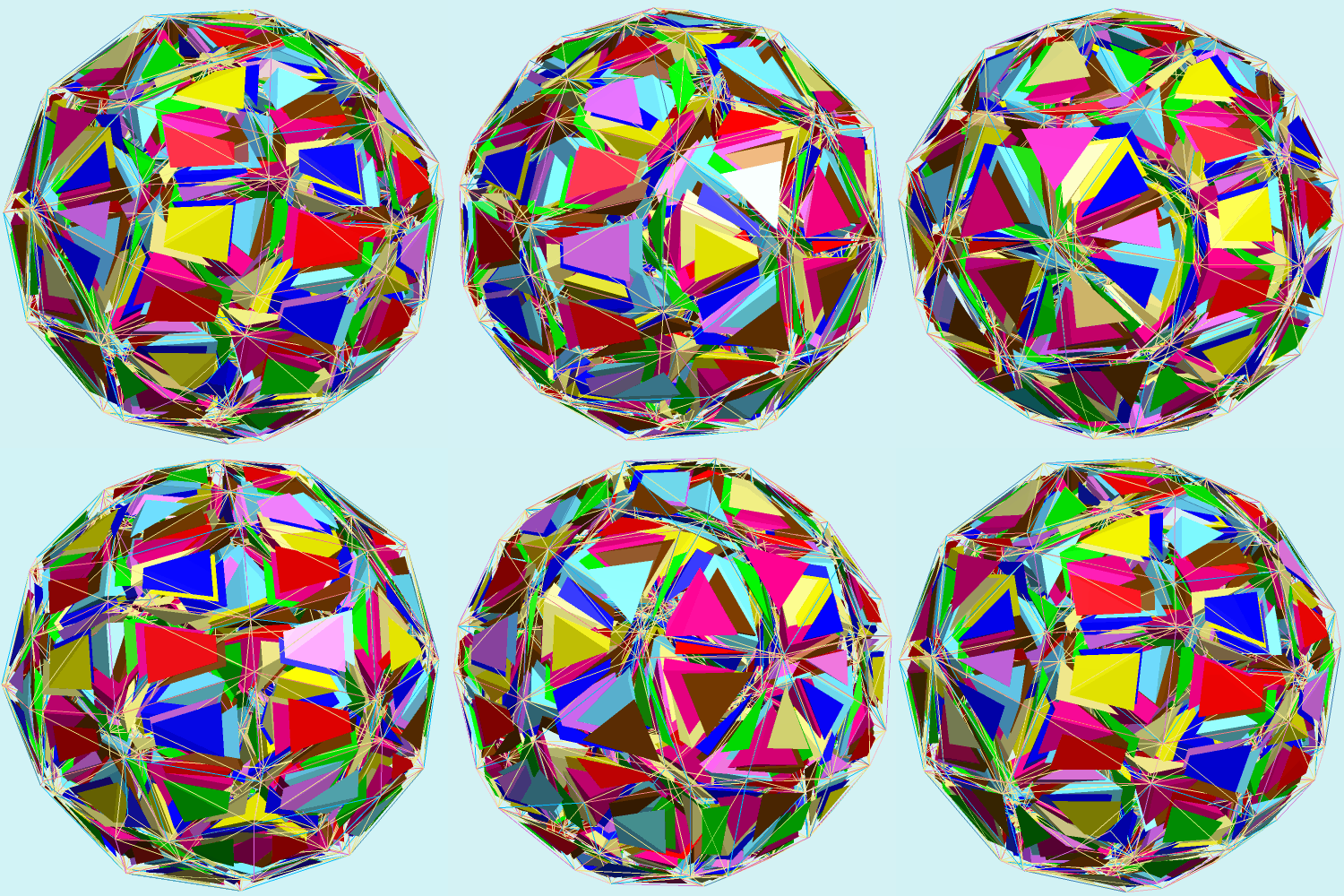

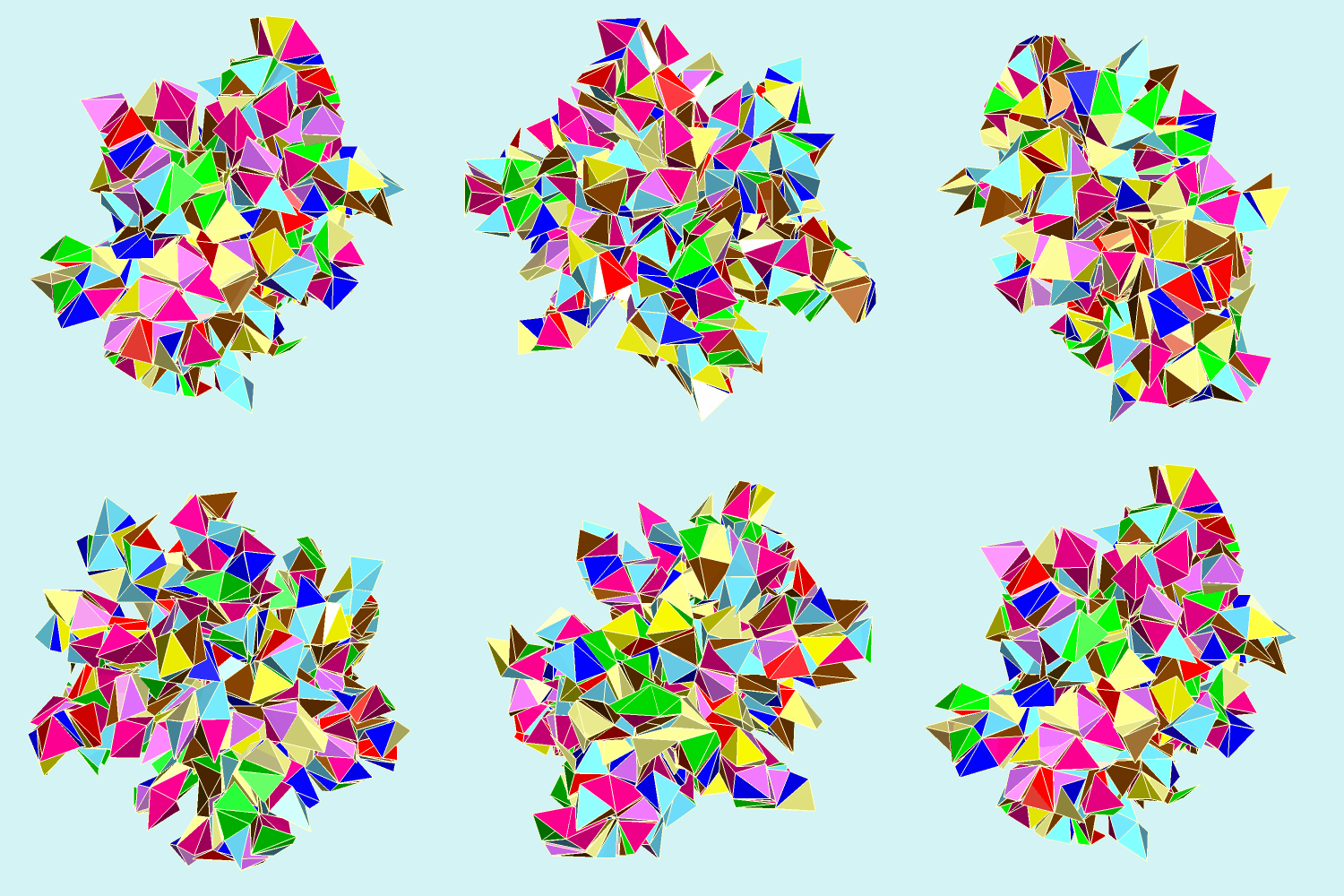
Tetteric Symmetry - [3,3:O] order 48*O. This is the symmetry of the tetratwister and is the continuous form of the stettic and astettic symmetries.
Kitetteric Symmetry - [3,3:O]⁺ order 24*O. This is the symmetry of the snit twister and is the continuous form of the skitettic and askitettic symmetries.
Cubiteric Symmetry - [4,3:O] order 96*O. This is the symmetry of the cube twister and is the continuous form of the scubic and ascubic symmetries.
Kicubiteric Symmetry - [4,3:O]⁺ order 48*O. This is the symmetry of the snic twister and is the continuuous form of the skicubic and askicubic symmetries.
Pyriteric Symmetry - [4,3⁺:O] order 48*O. This is the continuous form of the spyritic symmetries.
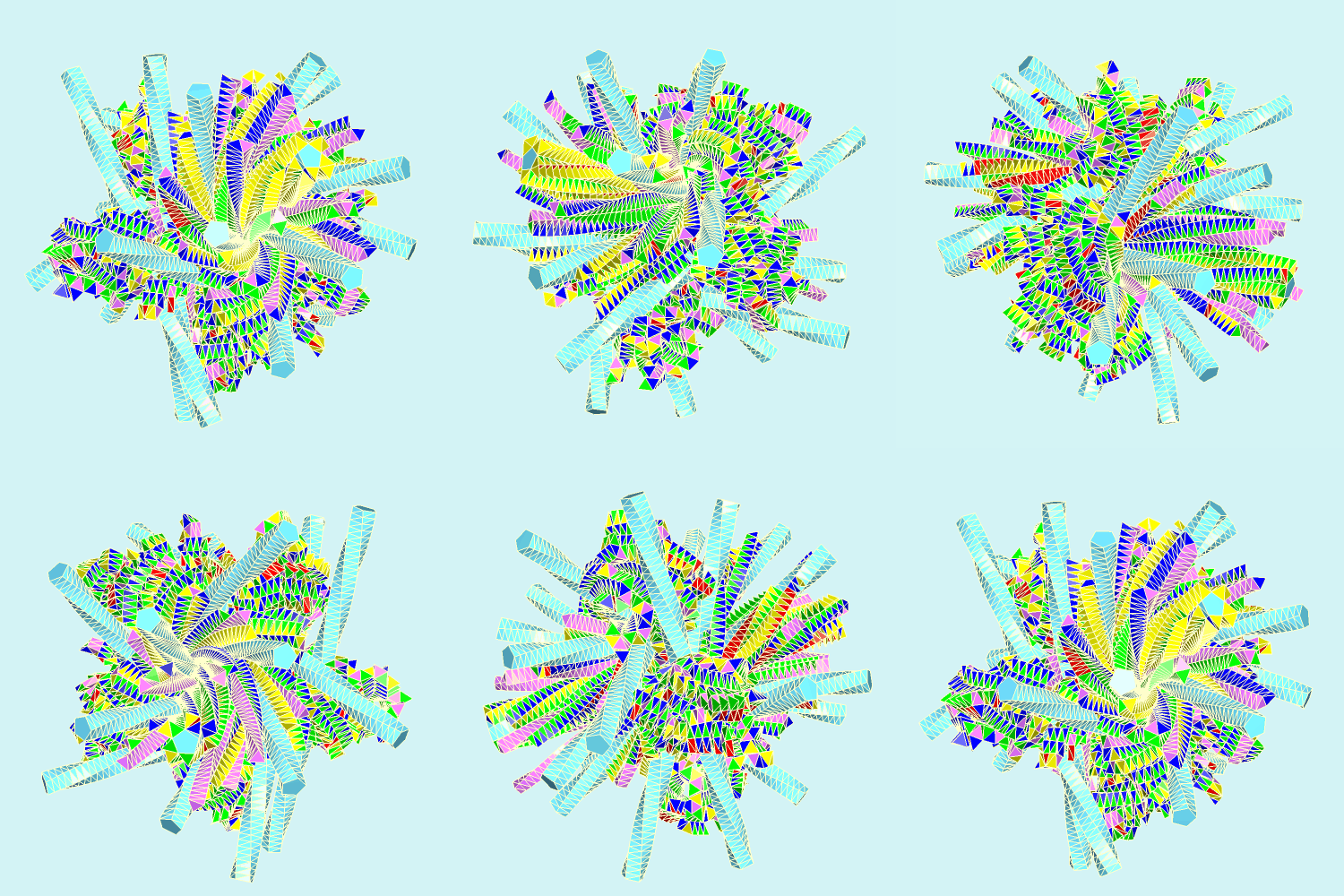
Doteric Symmetry - [5,3:O] order 240*O. This is the symmetry of the dodecatwister and is the continuous form of the swirldoic symmetries.
Kidoteric Symmetry - [5,3:O]⁺ order 120*O. This is the symmetry of the snid twister and is the continuous form of the skidoic symmetries.
These are the symmetries that Conway refered to as [I x D2n]. As n approaches infinity, these symmetries approach doteric symmetry. I coded these using the quarternion sets ex x cn1 and ex x cn2. When N is even, then there are 30 swirl rings with 2N symmetry which contains two sets of 60N points with kibrick symmetry and the rings generate 120N essic areas. When N is odd, the 30 swirl rings are ghosted and form girdles in white space instead and the points vanish, these girdles have skewed 4N symmetry. When N is divisible by 5, then there are two sets of 24N points with kipippic symmetry and a set of twelve swirl rings with 2N symmetry, these form 48N kipegic areas (4N spots per ring). When N is not divisible by 5, then the points here vanish and the rings are ghosted into white space, but do form girdles with 10mN/5 gyrogon symmetry where m is the modulus of N mod 5, 1 and 4 are considered equivalent as well as 2 and 3, but they gyrate in different directions. When N is divisible by 3, then there are two sets of 40N points with kitrippic symmetry and a set of 20 swirl rings with 2N symmetry, these form 4N kitrigic areas for each ring (80N all together). When N is not divisible by 3, then the points vanish and the rings are ghosted into white space, but do form girdles with 6N/3 gyrogon symmetry. White space creates 240N no sym areas. There are also two sets of 15N cross rings with square symmetry when N is even and one set of 30N cross rings with kisquare symmetry when odd.
1-Swirldoic Symmetry = 2-Skidoic Symmetry - [5,3:1] order 240. There are 12 ghost girdles with 10/5 gyrogonal symmetry, 20 ghost girdles with 6/3 gyrogonic symmetry, and 30 ghost girdles with skew tetragonal symmetry all in white space which generate 240 no sym areas. There are also 30 cross rings with kisquare symmetry which create 120 essic areas.
2-Swirldoic Symmetry - [5,3:2] order 480. This is the symmetry of spiddit. There are two sets of 120 points with kibrick symmetry which are in 30 rings where four spots from each set alternate. The rings have square symmetry and create 240 essic areas. There are 12 ghost girdles with 20/(5/2) gyrogonal symmetry and 20 ghost girdles with 12/3 gyrogonal symmetry. The ghost girdles are in white space. There are two sets of 30 cross rings with square symmetry which creates 240 essic regions each. White space creates 480 no sym areas.
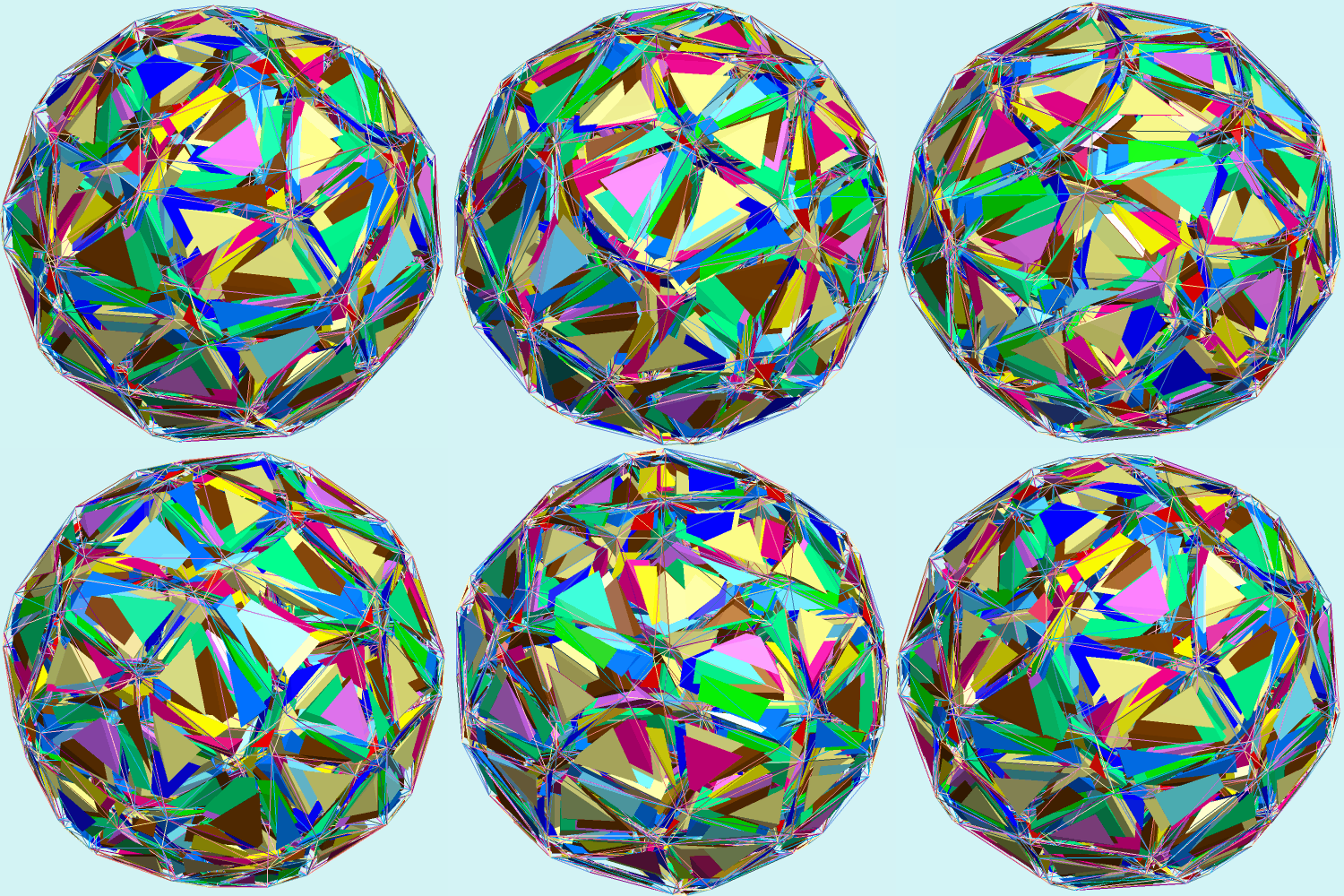

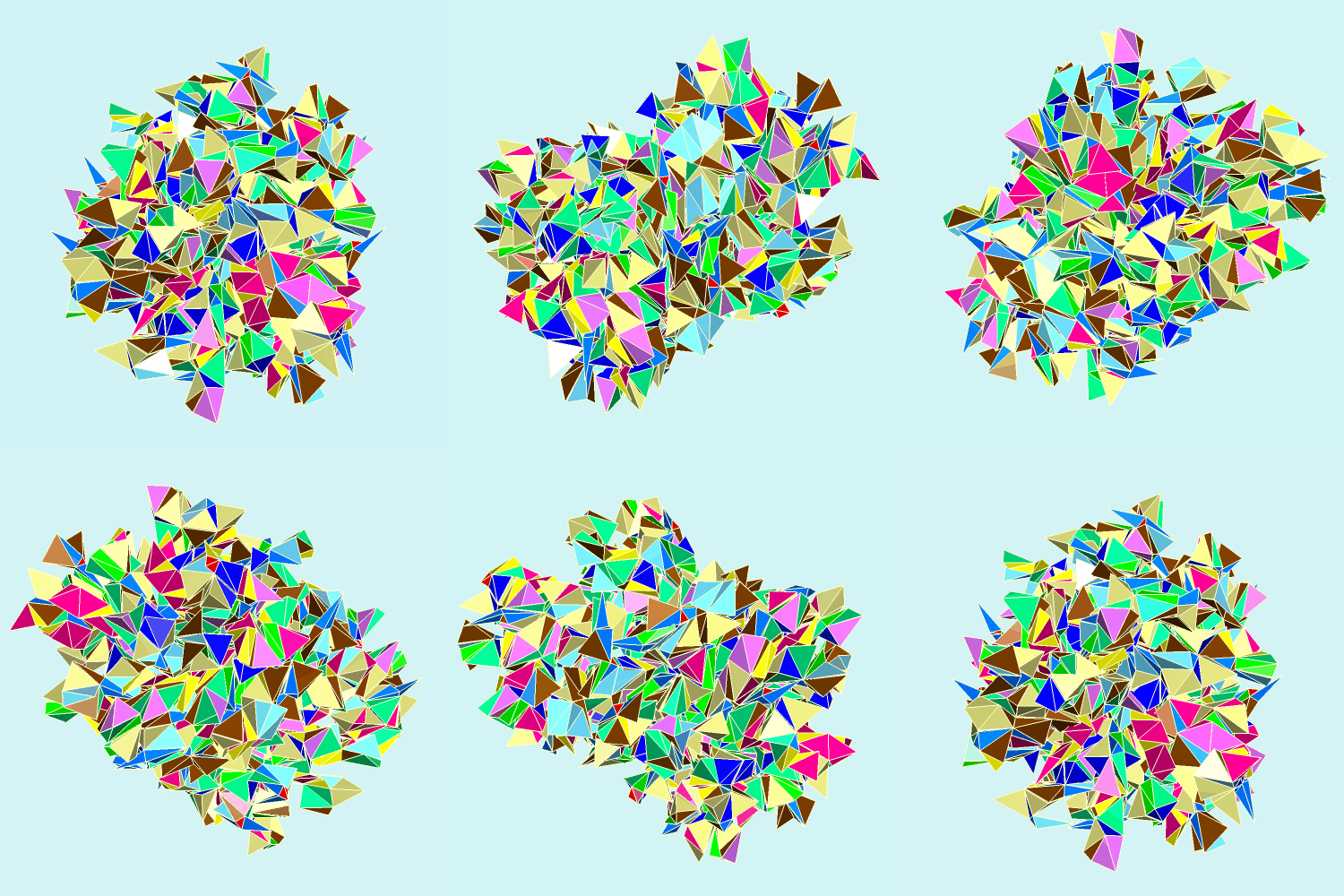
3-Swirldoic Symmetry - [5,3:3] order 720. This is the symmetry of sispatit. There are two sets of 120 points with kitrippic symmetry which are in 20 rings where 6 spots of each set alternate. The rings have hexagon symmetry and create 240 kitrigic regions. There are 12 ghost girdles with 30/(5/2) gyrogonal symmetry and 30 ghost girdles with skew 12-gon symmetry, both in white space. There are 90 cross rings with kisquare symmetry which generate 360 essic regions. White space creates 720 no-sym regions.
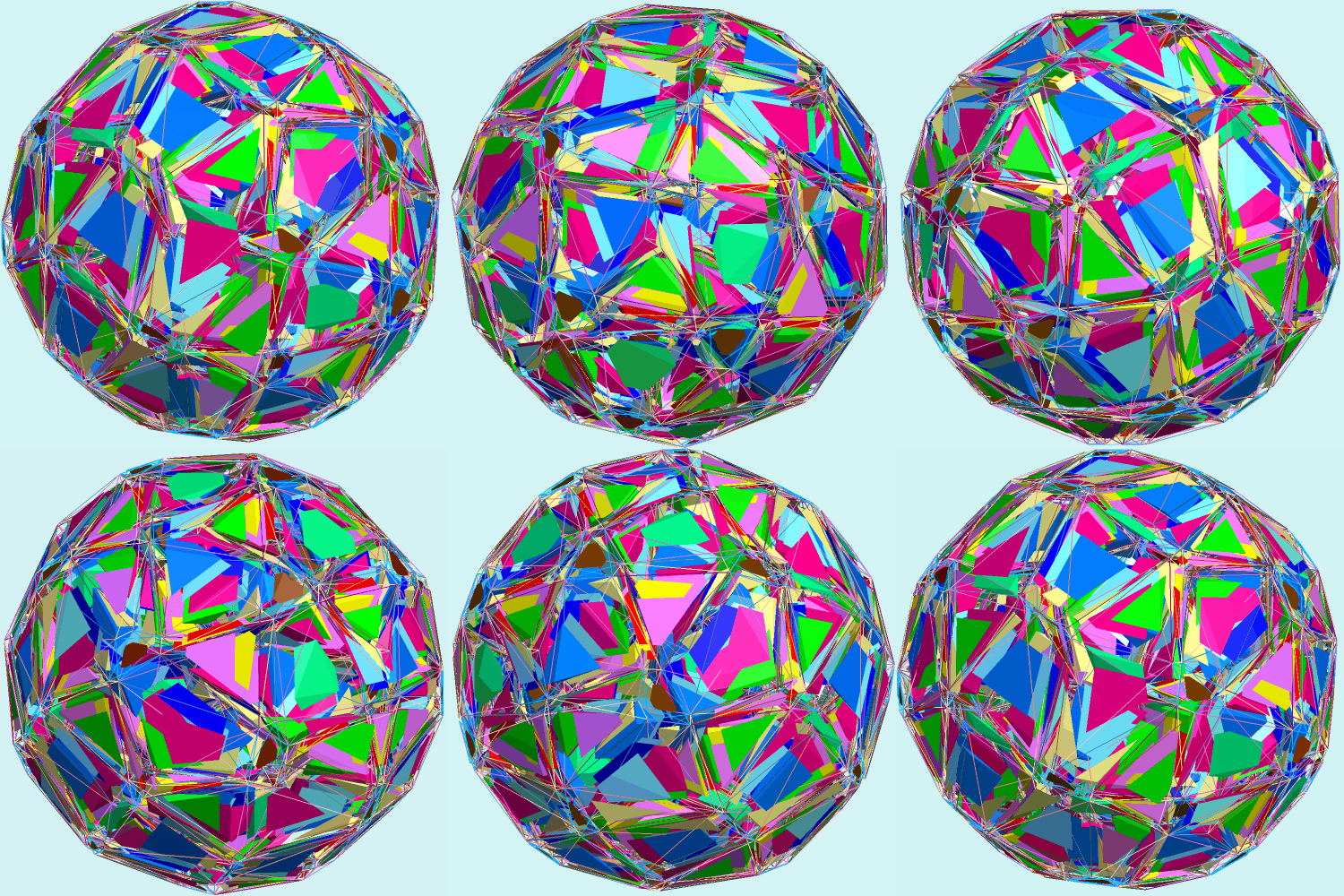

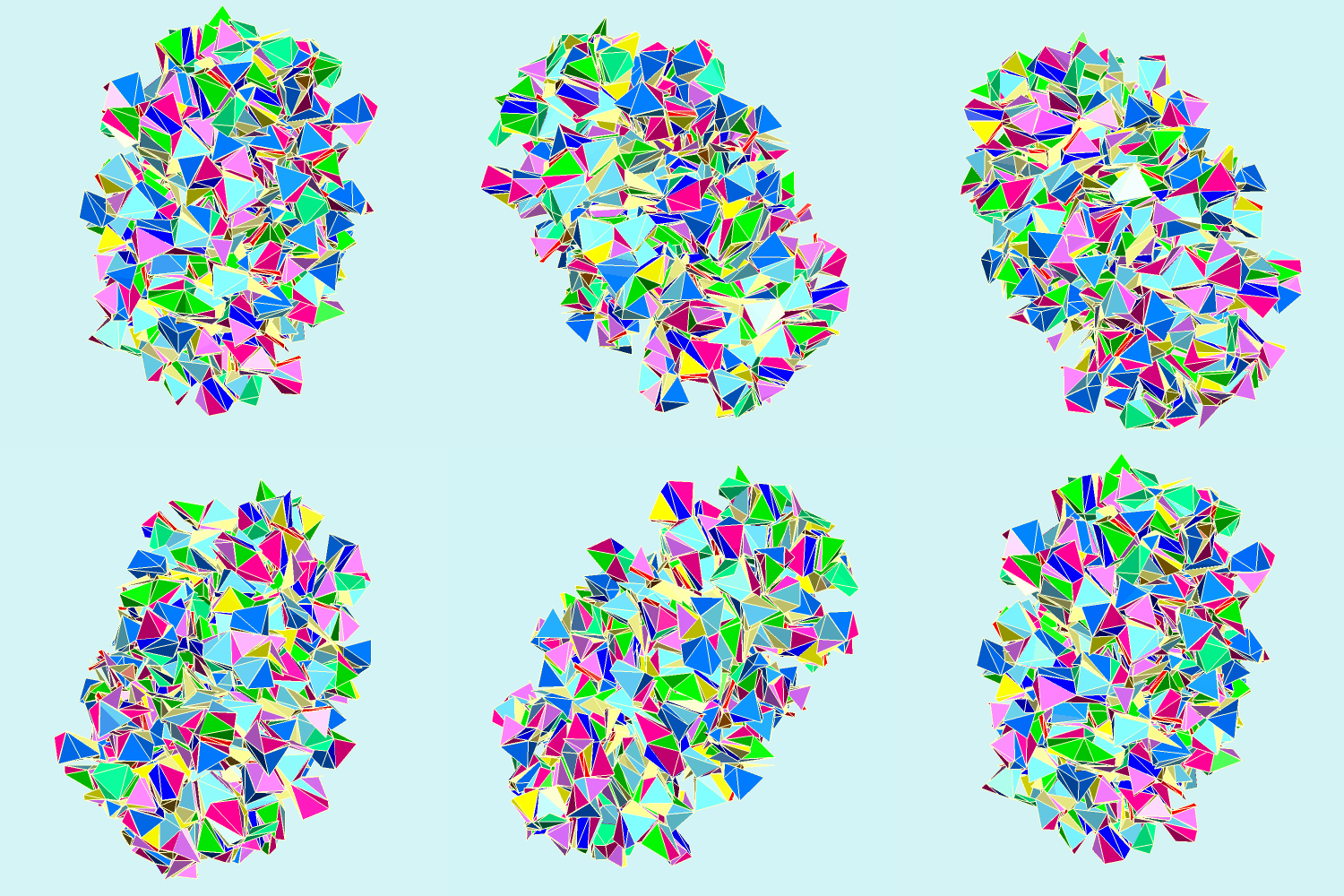
4-Swirldoic Symmetry - [5,3:4] order 960. There are two sets of 240 points with kibrick symmetry which are in 30 rings where eight spots from each set alternate. The rings have octagon symmetry and create 480 essic areas. There are 12 ghost girdles with 40/5 gyrogonal symmetry and 20 ghost girdles with 24/3 gyrogonal symmetry. The ghost girdles are in white space. There are two sets of 60 cross rings with square symmetry which creates 480 essic regions each. White space creates 960 no sym areas.


5-Swirldoic Symmetry - [5,3:5] order 1200. Also called sispic symmetry, for it is the symmetry of sisp. It has two sets of 120 kipippic spots which are in 12 rings, where ten spots in both sets alternate. The rings have decagon symmetry and generate 20 kipegic regions each, totalling 240 spots. There are 20 ghost girdles with 30/3-gyrogonic symmetry and 30 ghost girdles with skew 20-gonal symmetry, these are in white space. There are 150 cross rings with kisquare symmetry which form 600 essic areas, five cross rings meet at each kipippic spot. White space creates 1200 no sym areas.
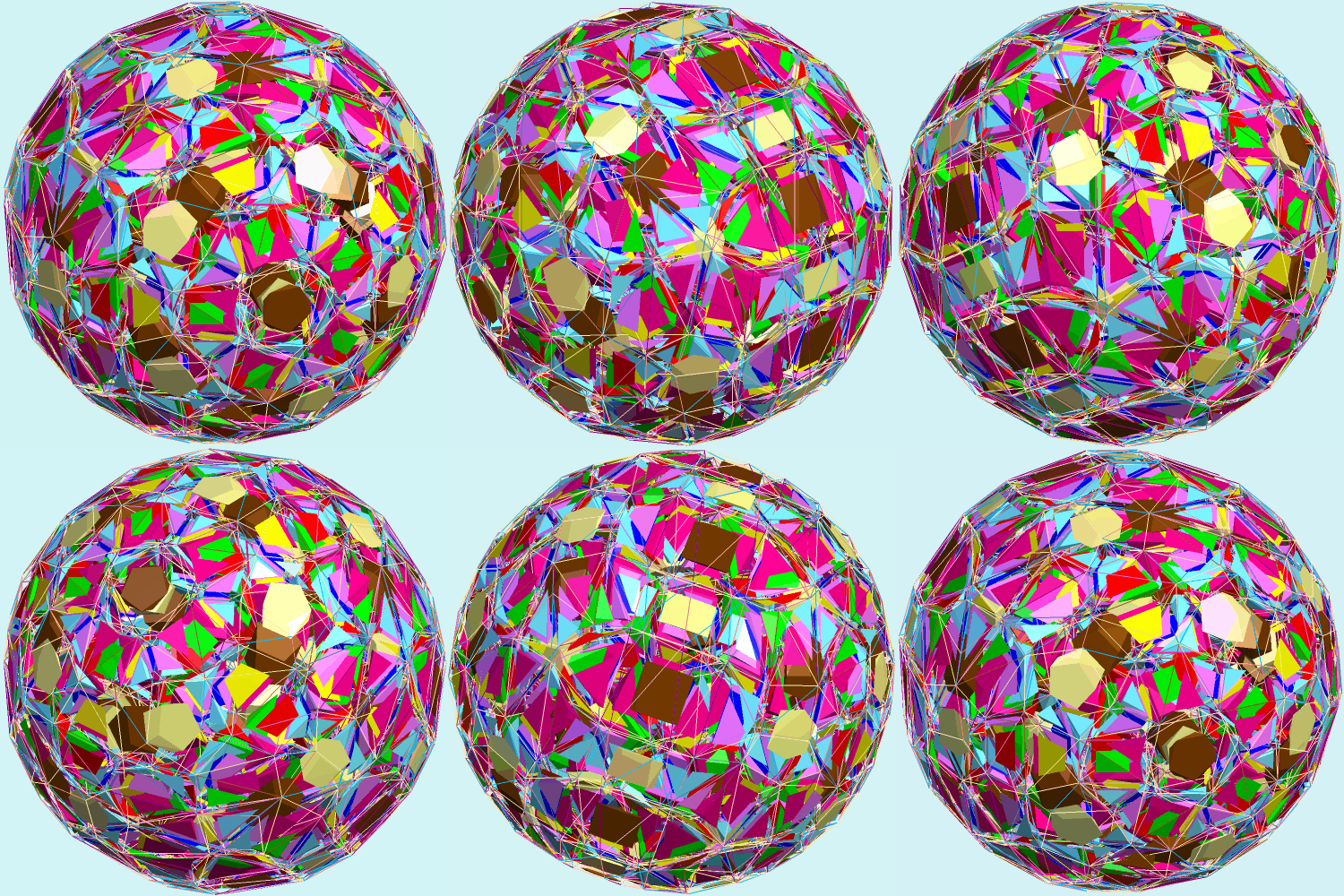
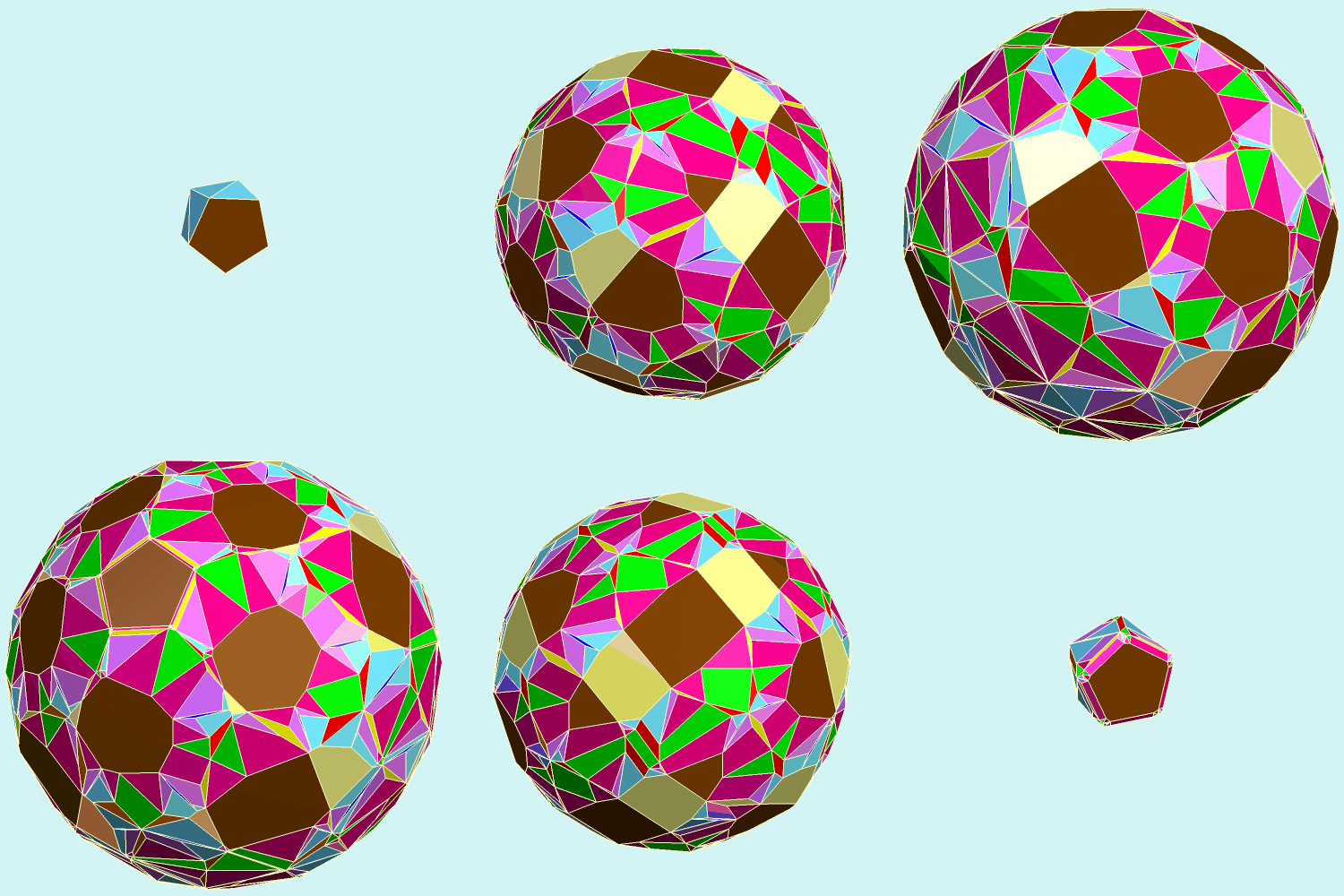

6-Swirldoic Symmetry - [5,3:6] order 1440. It has two sets of 240 kitrippic spots which are in 20 rings, where 12 spots in each alternate. The rings have dodecagonal symmetry and generate 24 kitrigic regions each, totaling 480 areas. There are two sets of 360 spots with kibrick symmetry which show up in thirty rings, where 12 spots in each set alternate. These rings also have 12-gon symmetry and generate 24 essic regions each, totaling 720 areas. There are also 12 ghost girdles with 60/5-gyrogonal symmetry which are in white space. There are two sets of 90 cross rings with square symmetry which form 720 essic areas, three meet at each kitrippic spot. White space creates 1440 no sym areas.
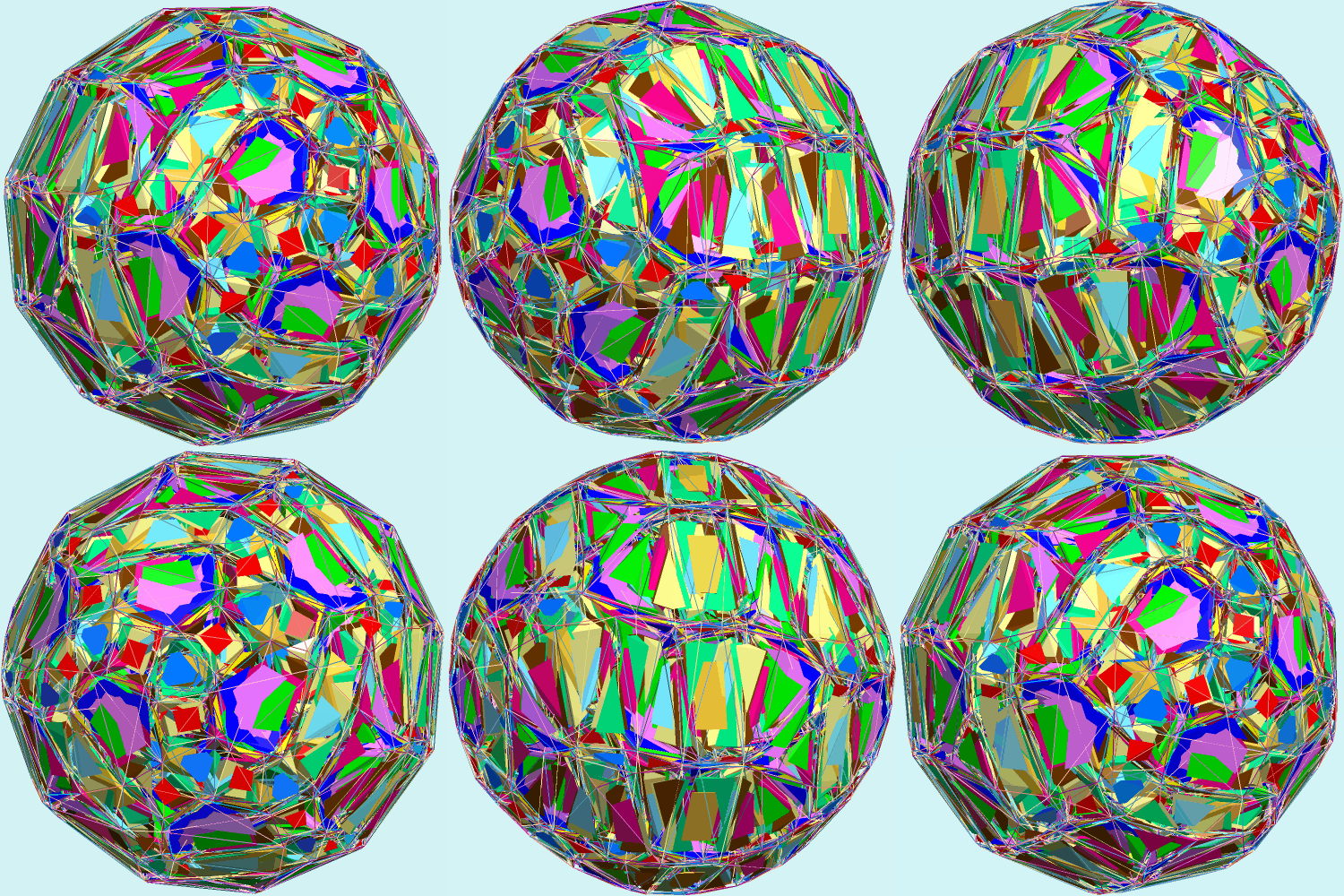

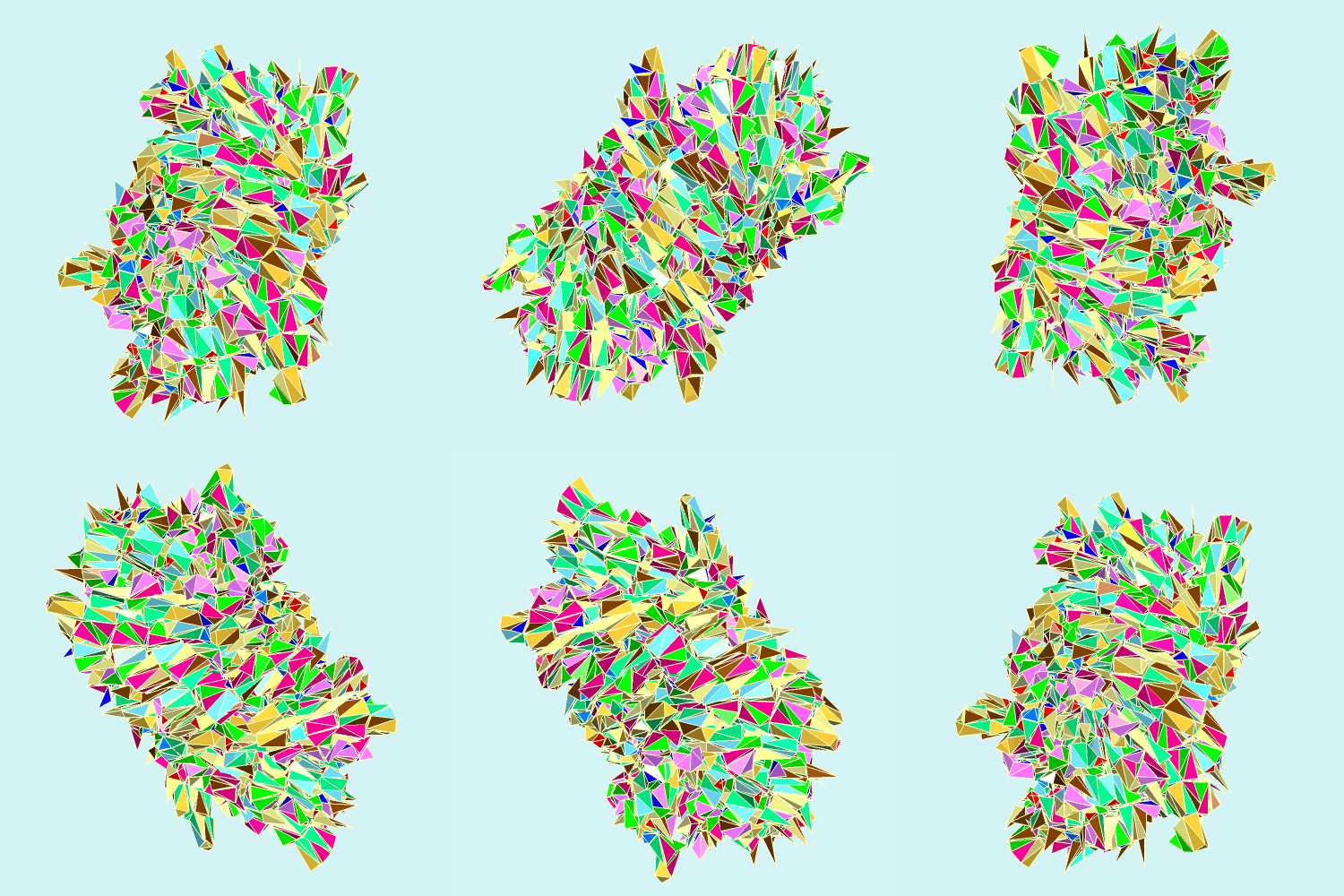
7-Swirldoic Symmetry - [5,3:7] order 1680. There are 12 ghost girdles with 70/(5/2)-gyrogonal symmetry, 20 ghost girdles with 42/3-gyrogonal symmetry, and 30 ghost girdles with skew 28-gonal symmetry all in white space which generate 1680 no sym areas. There are 210 cross rings with kisquare symmetry which generate 840 essic areas.


8-Swirldoic Symmetry - [5,3:8] order 1920. There are two sets of 480 points with kibrick symmetry which are in 30 rings where 16 spots from each set alternate. The rings have 16-gon symmetry and create 960 essic areas. There are 12 ghost girdles with 80/(5/2) gyrogonal symmetry and 20 ghost girdles with 48/3 gyrogonal symmetry. The ghost girdles are in white space. There are two sets of 120 cross rings with square symmetry which creates 960 essic regions each. White space creates 1920 no sym areas.

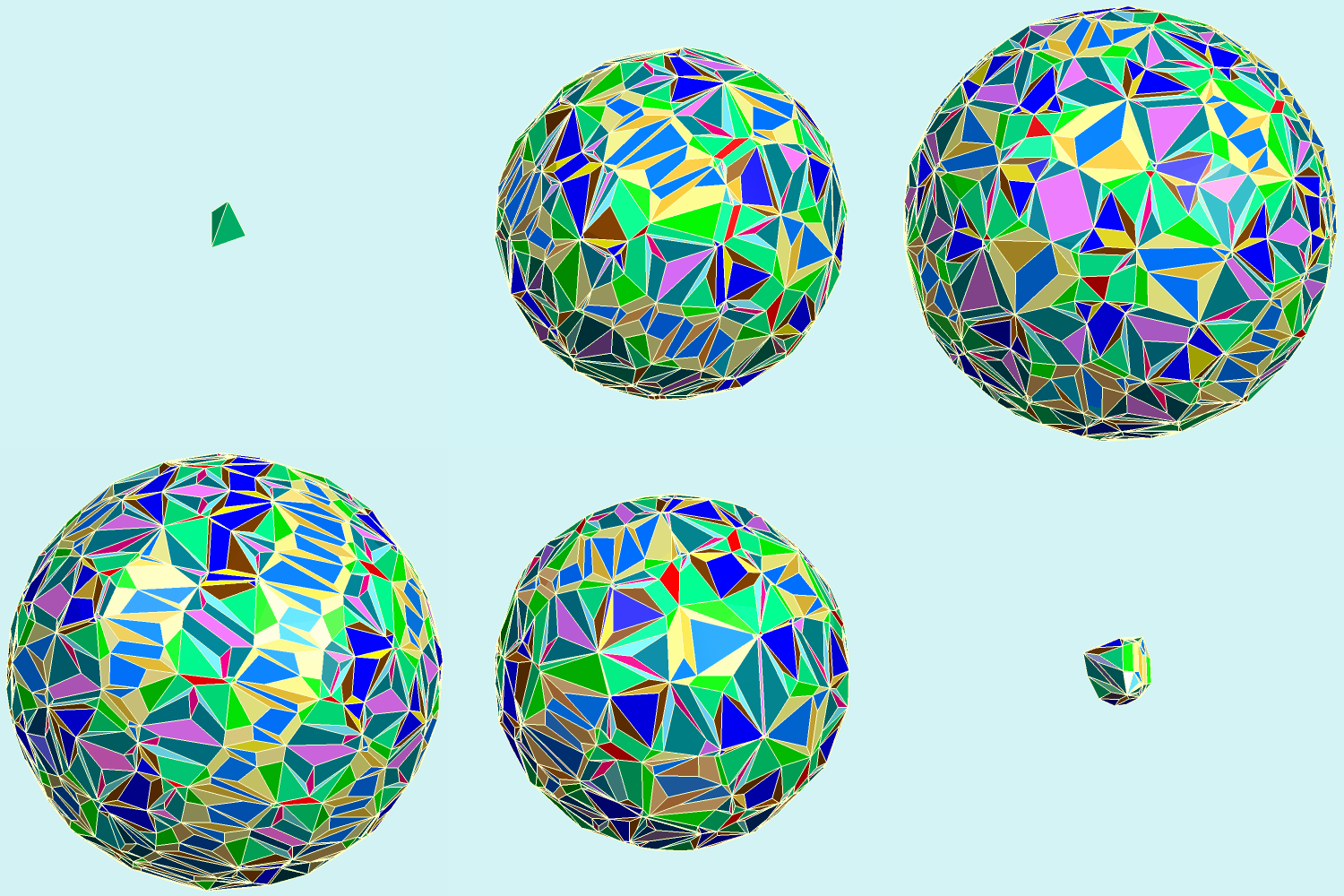
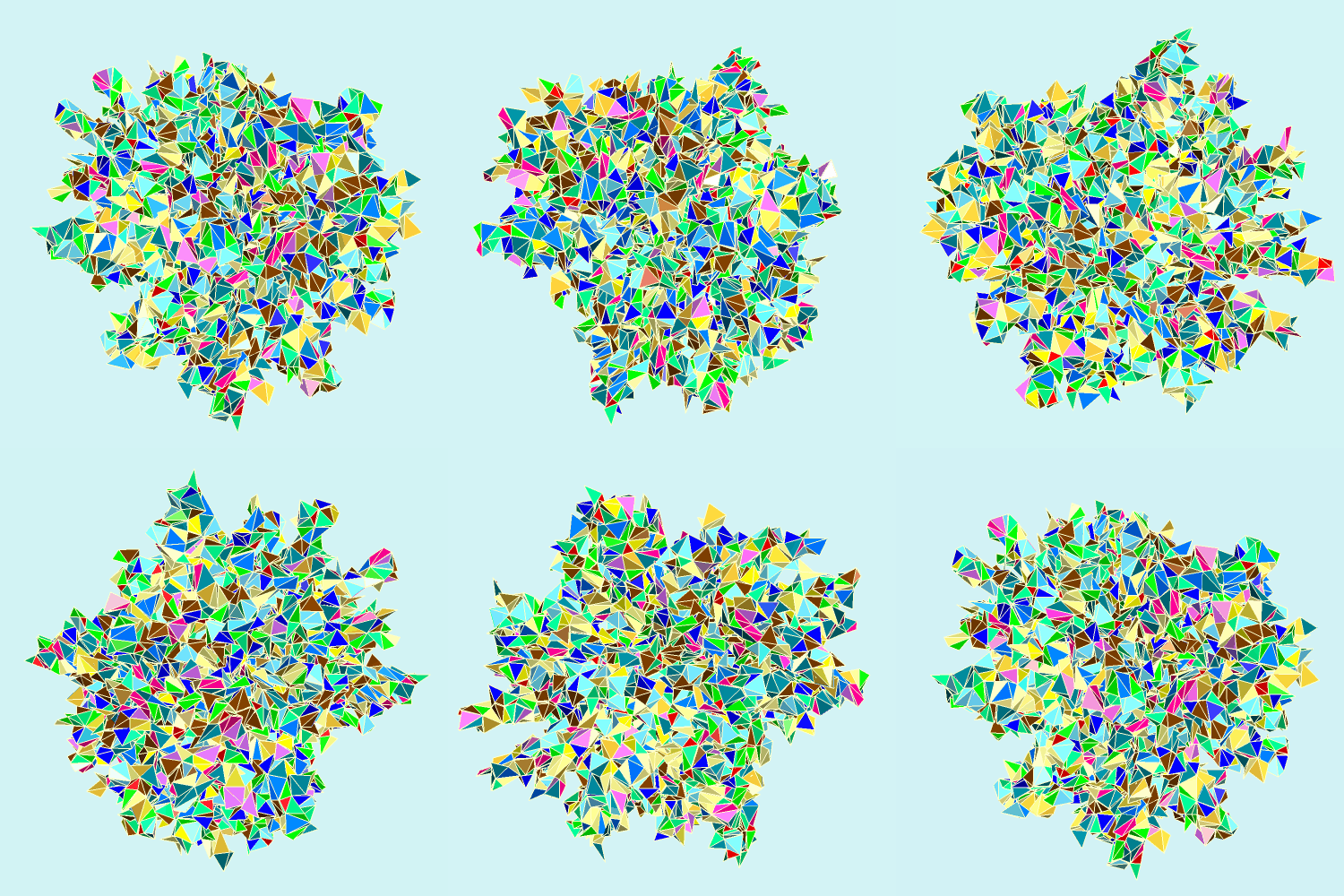
9-Swirldoic Symmetry - [5,3:9] order 2160. There are two sets of 360 points with kitrippic symmetry which are in 20 rings where 18 spots of each set alternate. The rings have 18-gon symmetry and create 720 kitrigic regions. There are 12 ghost girdles with 90/5 gyrogonal symmetry and 30 ghost girdles with skew 36-gon symmetry, both in white space. There are 270 cross rings with kisquare symmetry which generate 1080 essic regions. White space creates 2160 no-sym regions.
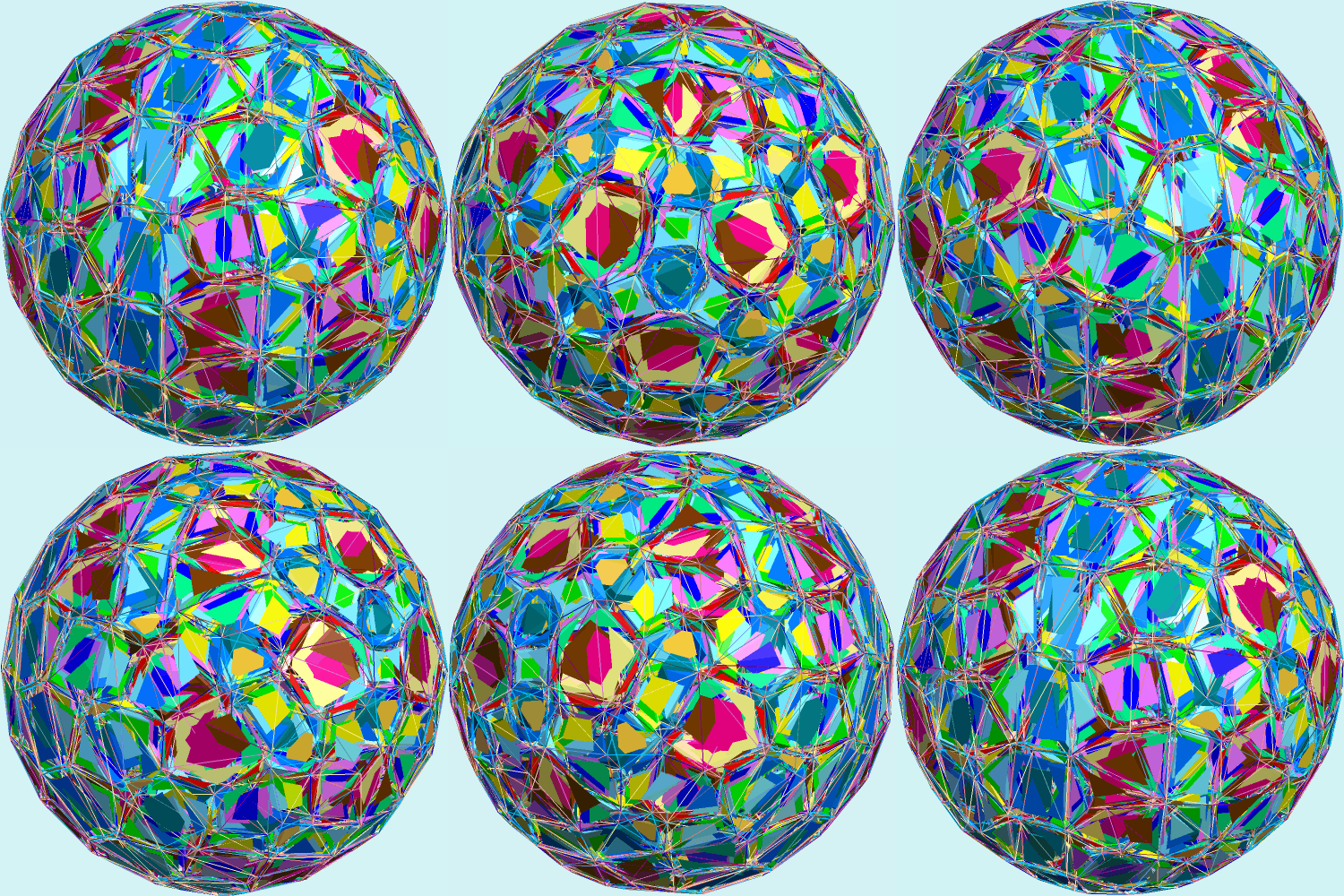
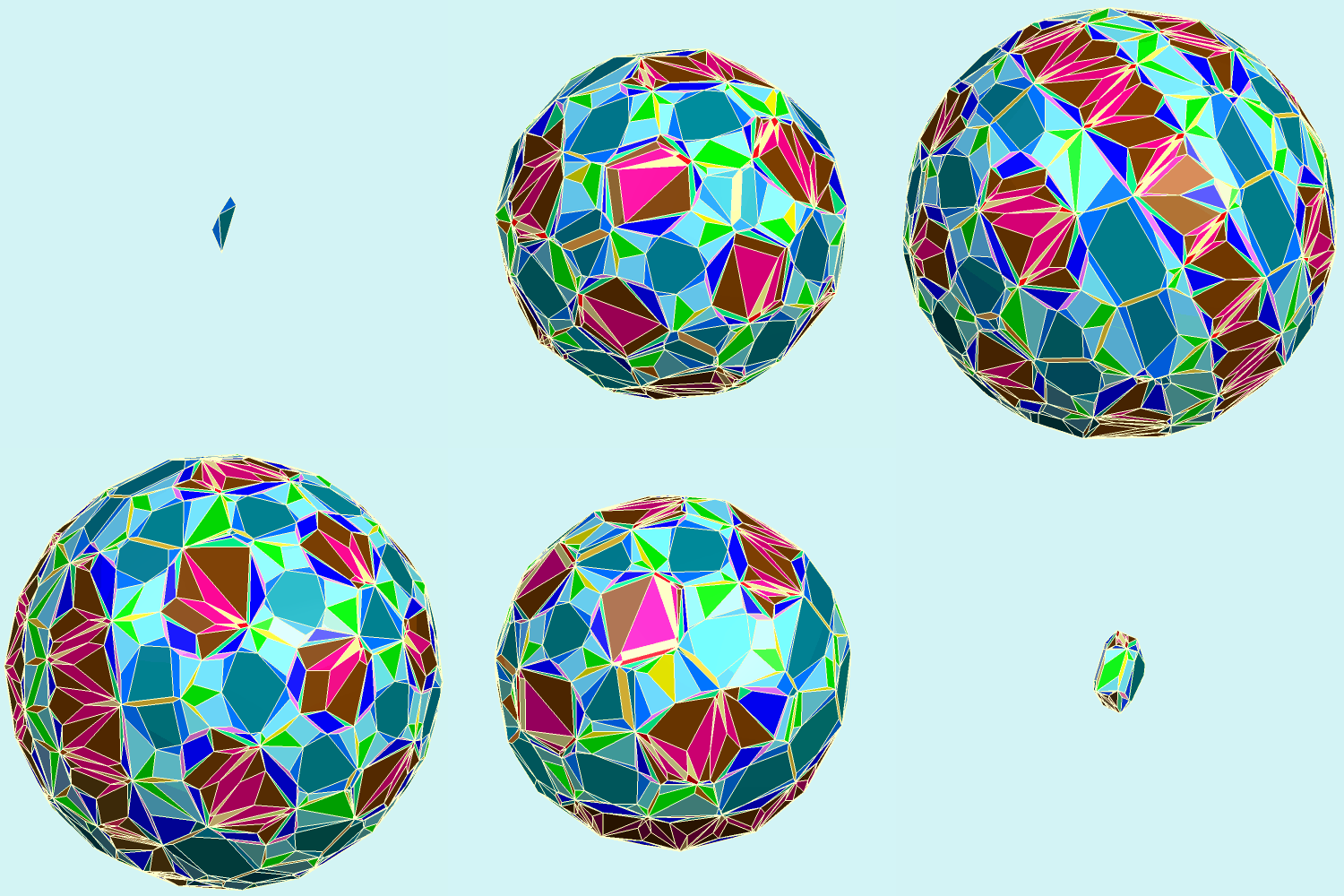

10-Swirldoic Symmetry - [5,3:10] order 2400. It has two sets of 240 kipippic spots which are in 12 rings, where 20 spots in both sets alternate. The rings have 20-gon symmetry and generate 40 kipegic regions each, totalling 480 spots. There are two sets of 600 points with kibrick symmetry which are in 30 rings where 20 spots from each set alternate. The rings have 20-gon symmetry and create 1200 essic areas. There are 20 ghost girdles with 60/3-gyrogonic symmetry which are in white space. There are two sets of 150 cross rings with square symmetry which form 1200 essic areas. White space creates 2400 no sym areas.
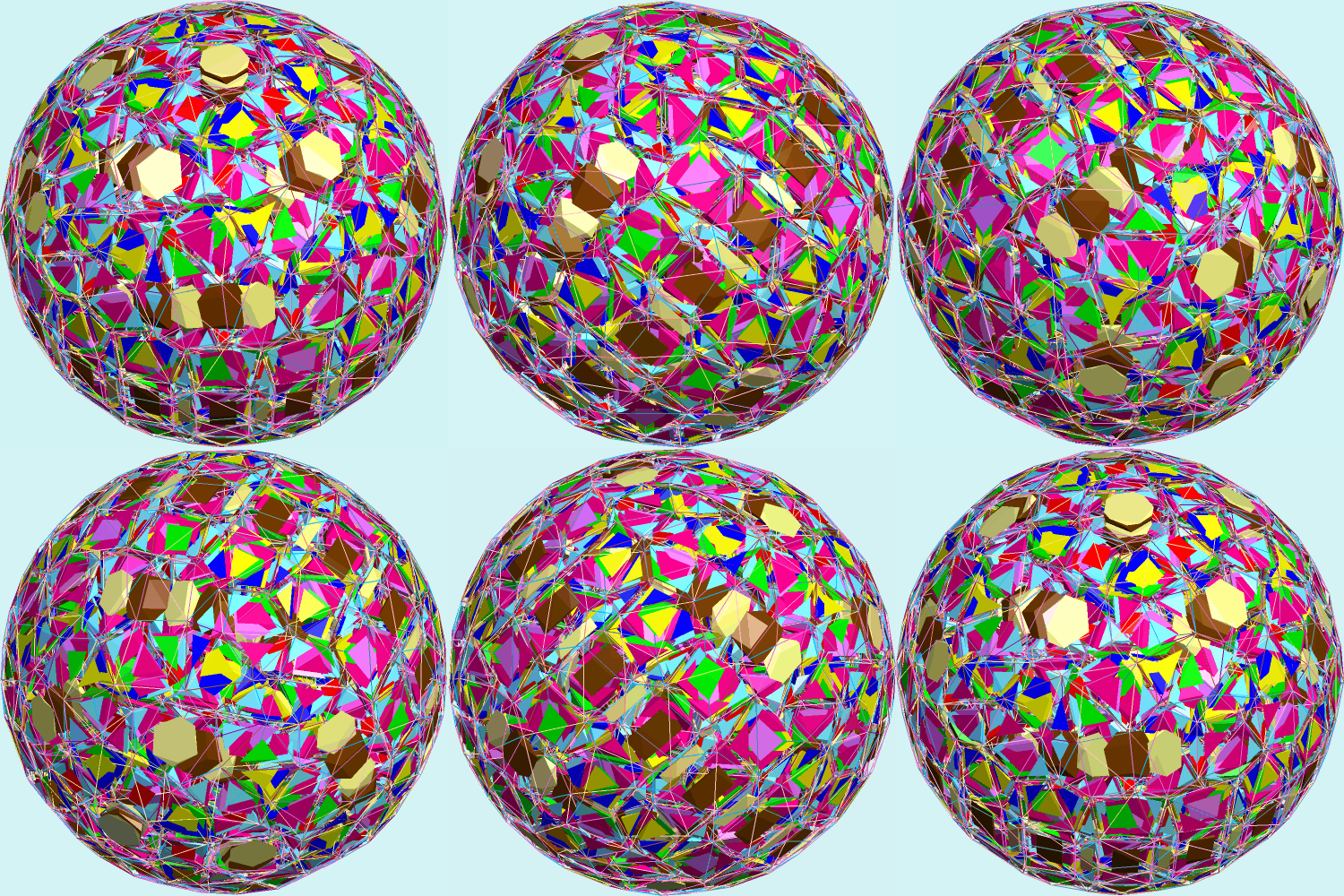
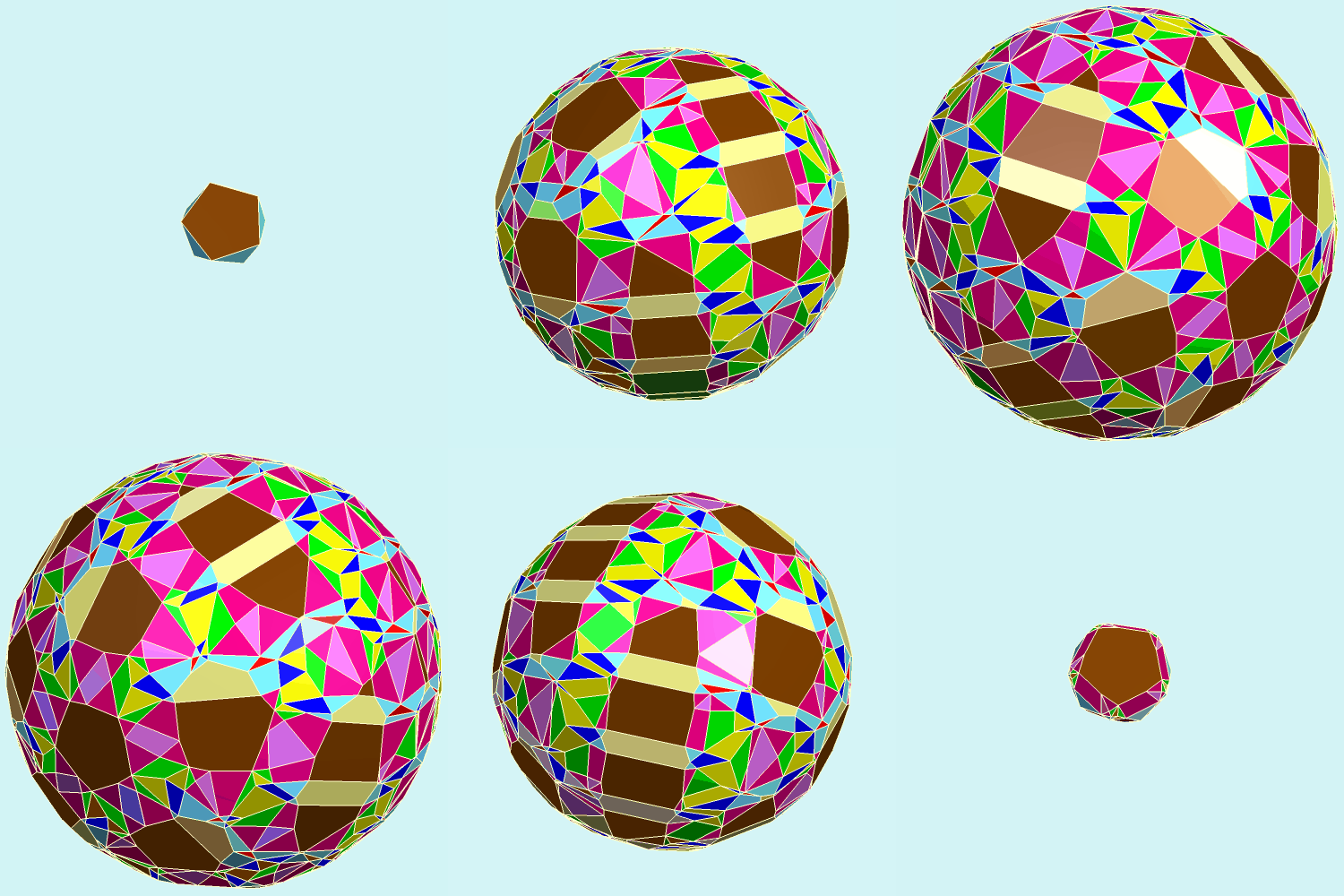
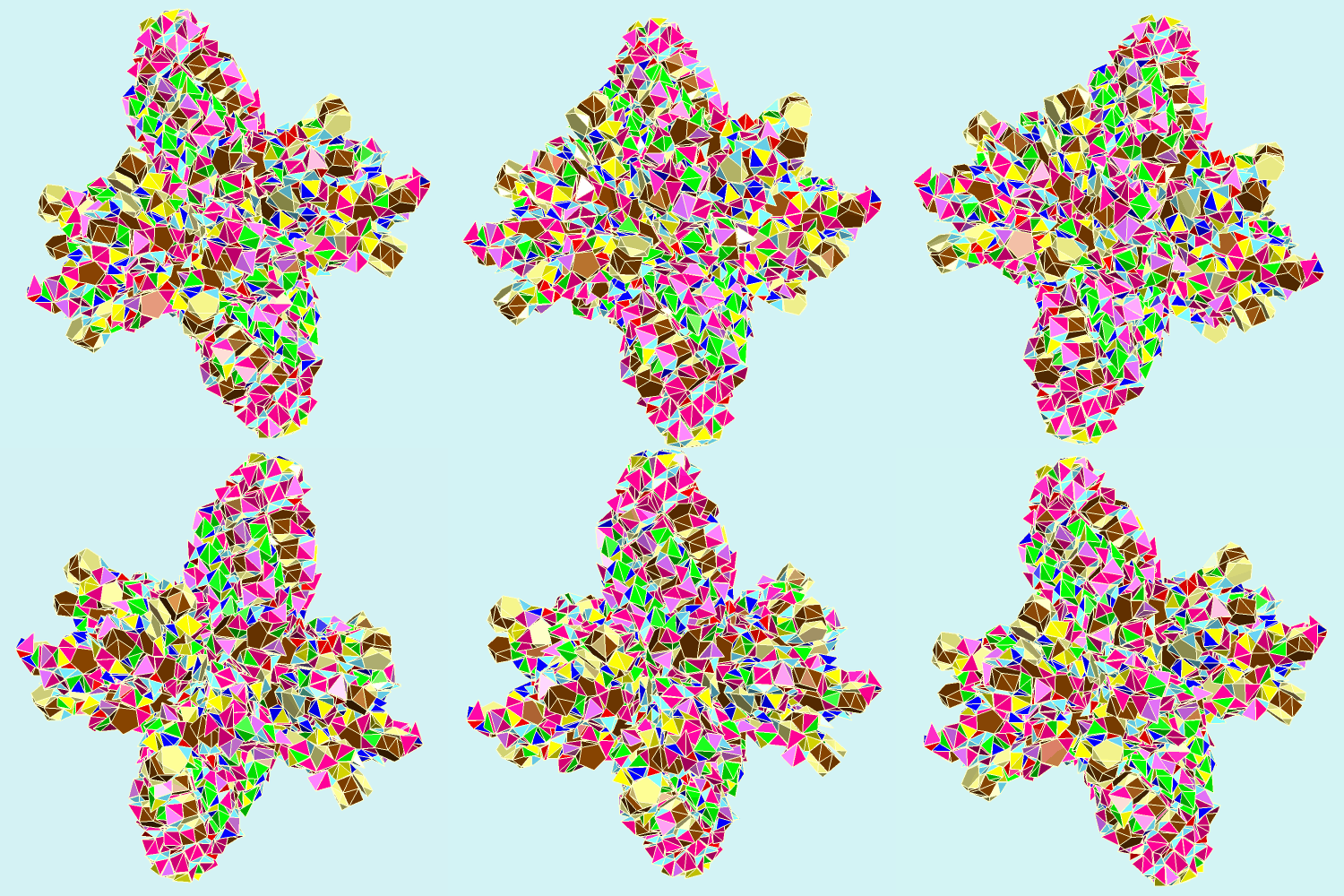
12-Swirldoic Symmetry - [5,3:12] order 2880. It has two sets of 480 kitrippic spots which are in 20 rings, where 24 spots in each alternate. The rings have 24-gonal symmetry and generate 48 kitrigic regions each, totaling 960 areas. There are two sets of 720 spots with kibrick symmetry which show up in thirty rings, where 24 spots in each set alternate. These rings also have 24-gon symmetry and generate 48 essic regions each, totaling 1440 areas. There are also 12 ghost girdles with 120/(5/2)-gyrogonal symmetry which are in white space. There are two sets of 180 cross rings with square symmetry which form 1440 essic areas, three meet at each kitrippic spot. White space creates 2880 no sym areas.


15-Swirldoic Symmetry - [5,3:15] order 3600. It has two sets of 360 kipippic spots which are in 12 rings, where 30 spots in both sets alternate. The rings have 30-gon symmetry and generate 60 kipegic regions each, totalling 720 spots. There are two sets of 600 points with kitrippic symmetry which are in 20 rings where 30 spots of each set alternate. The rings have 30-gon symmetry and create 1200 kitrigic regions. There are 30 ghost girdles with skew 60-gonal symmetry, these are in white space. There are 450 cross rings with kisquare symmetry which form 1800 essic areas, five cross rings meet at each kipippic spot. White space creates 3600 no sym areas.


18-Swirldoic Symmetry - [5,3:18] order 4320. It has two sets of 720 kitrippic spots which are in 20 rings, where 36 spots in each alternate. The rings have 36-gonal symmetry and generate 72 kitrigic regions each, totaling 1440 areas. There are two sets of 1080 spots with kibrick symmetry which show up in thirty rings, where 36 spots in each set alternate. These rings also have 36-gon symmetry and generate 72 essic regions each, totaling 2160 areas. There are also 12 ghost girdles with 180/(5/2)-gyrogonal symmetry which are in white space. There are two sets of 270 cross rings with square symmetry which form 2160 essic areas each, three meet at each kitrippic spot. White space creates 4320 no sym areas.


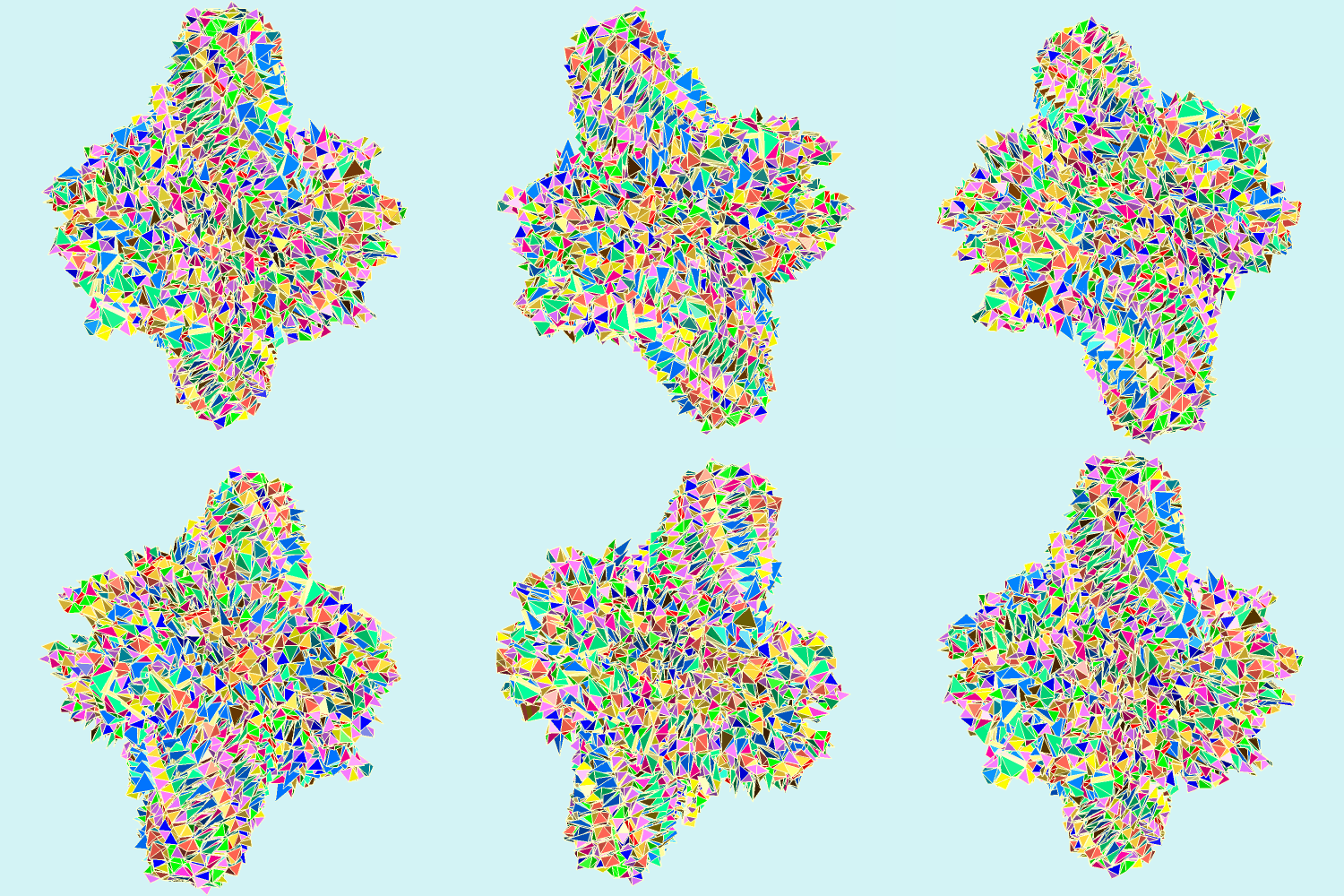
20-Swirldoic Symmetry - [5,3:20] order 4800. It has two sets of 480 kipippic spots which are in 12 rings, where 40 spots in both sets alternate. The rings have 40-gon symmetry and generate 80 kipegic regions each, totalling 960 spots. There are two sets of 1200 points with kibrick symmetry which are in 30 rings where 40 spots from each set alternate. The rings have 40-gon symmetry and create 2400 essic areas. There are 20 ghost girdles with 120/3-gyrogonic symmetry which are in white space. There are two sets of 300 cross rings with square symmetry which form 2400 essic areas each. White space creates 4800 no sym areas.
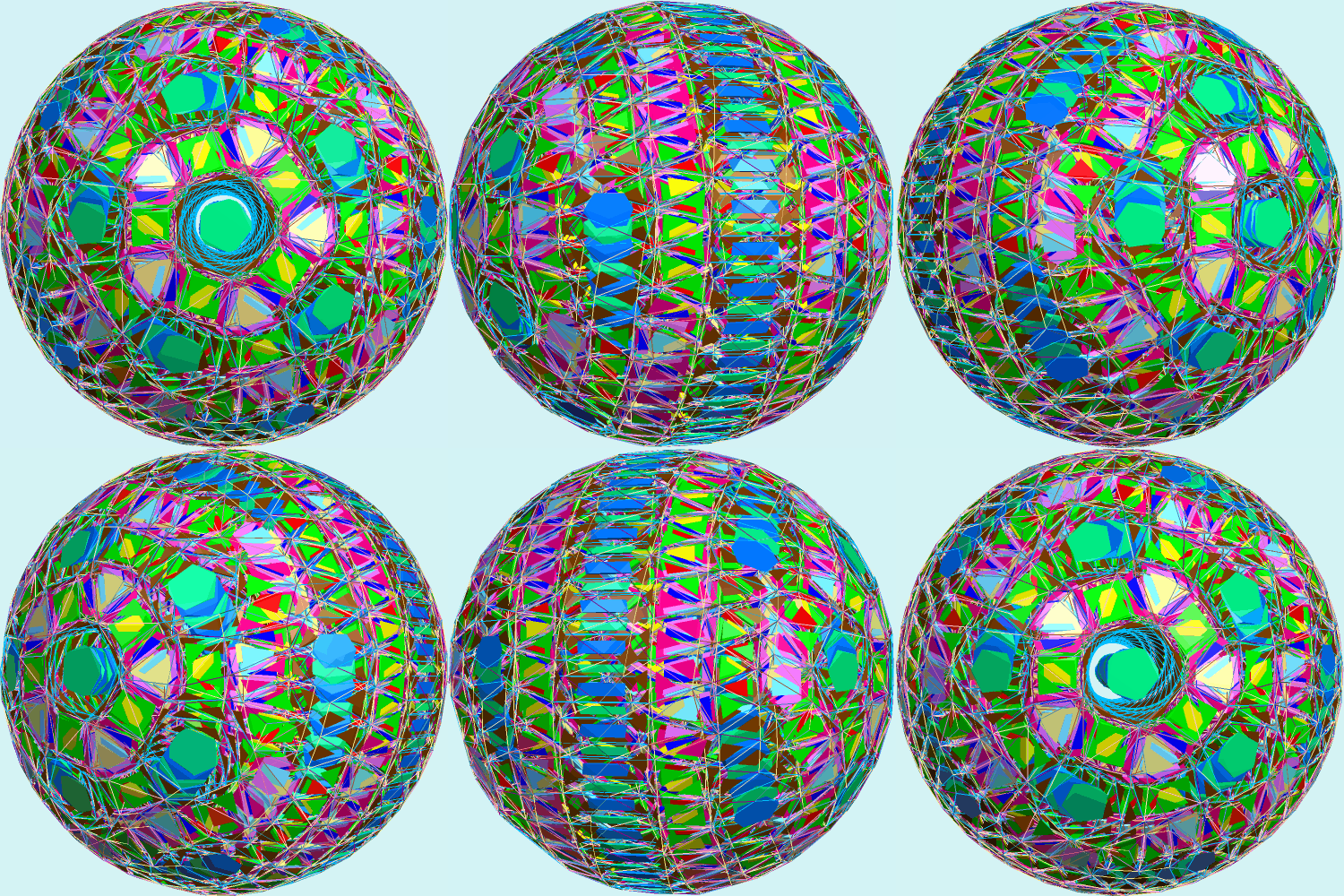


25-Swirldoic Symmetry - [5,3:25] order 6000. It has two sets of 600 kipippic spots which are in 12 rings, where 50 spots in both sets alternate. The rings have 50-gon symmetry and generate 100 kipegic regions each, totalling 1200 spots. There are 20 ghost girdles with 150/3-gyrogonic symmetry and 30 ghost girdles with skew 100-gonal symmetry, these are in white space. There are 750 cross rings with kisquare symmetry which form 3000 essic areas, five cross rings meet at each kipippic spot. White space creates 6000 no sym areas.
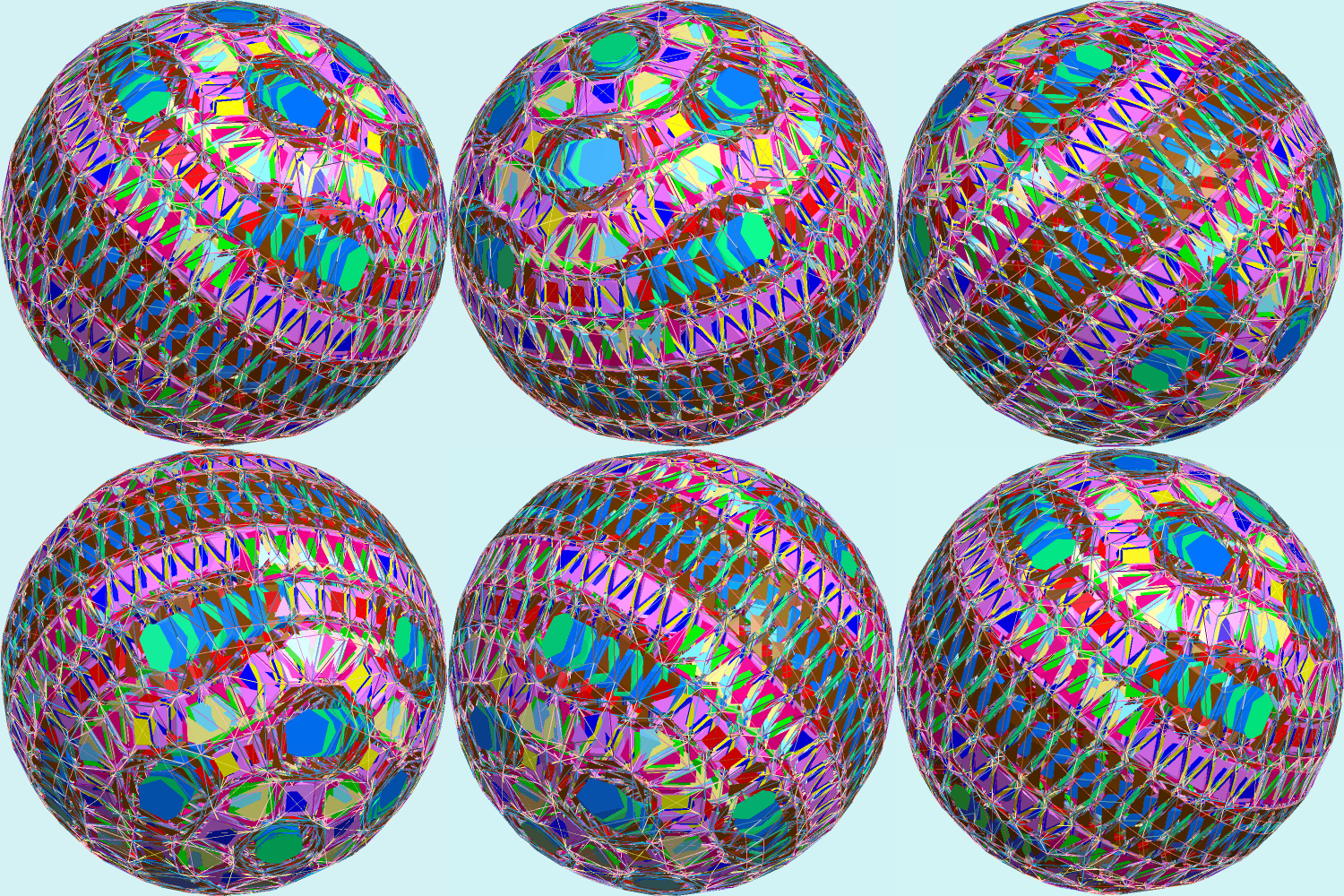

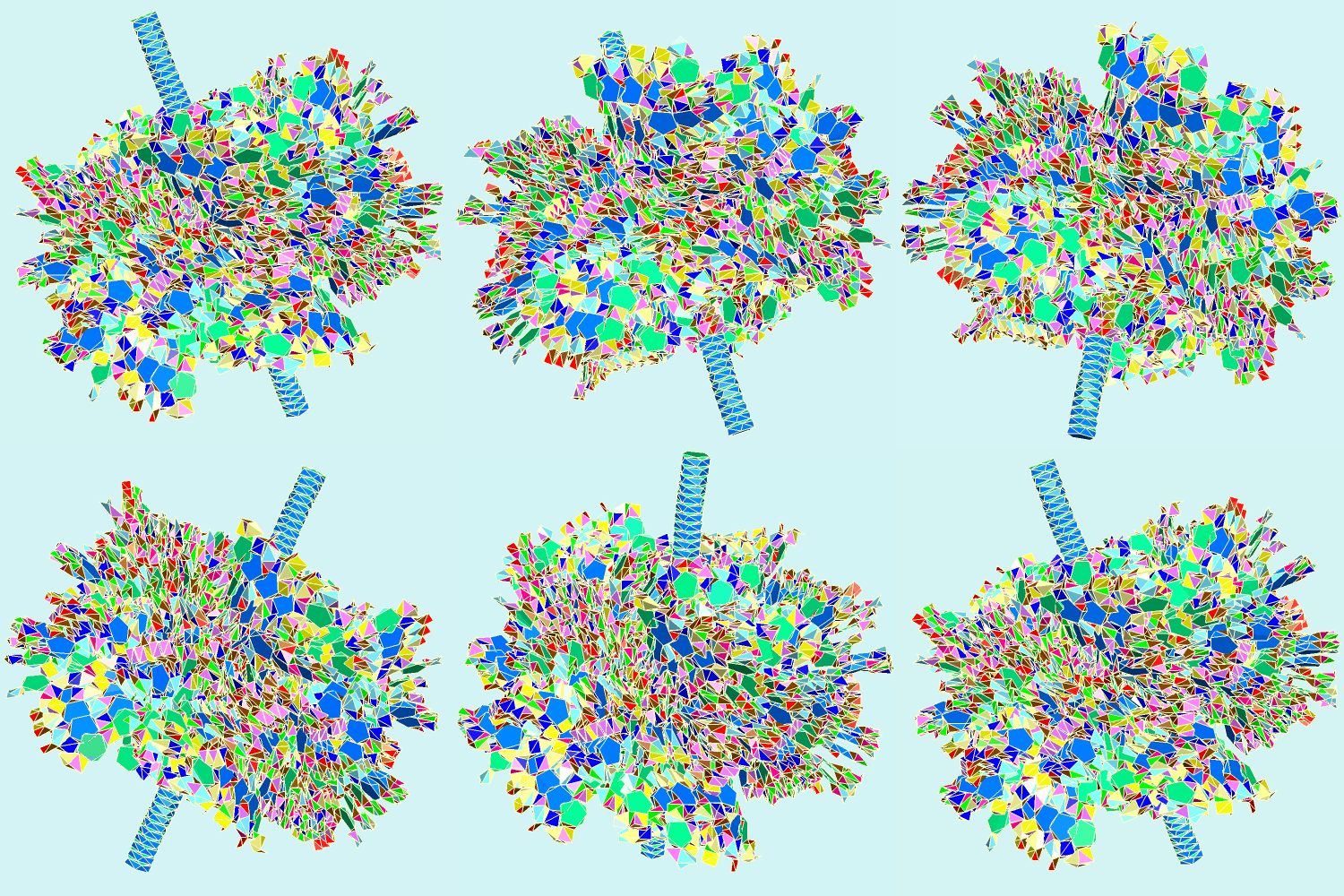
30-Swirldoic Symmetry - [5,3:30] order 7200. It has two sets of 720 kipippic spots which are in 12 rings, where 60 spots in both sets alternate. The rings have 60-gon symmetry and generate 120 kipegic regions each, totalling 1440 spots. There are two sets of 1200 points with kitrippic symmetry which are in 20 rings where 60 spots of each set alternate. The rings have 60-gon symmetry and create 2400 kitrigic regions. There are two sets of 1800 points with kibrick symmetry which are in 30 rings where 60 spots from each set alternate. The rings have 60-gon symmetry and create 3600 essic areas. There are two sets of 450 cross rings with square symmetry which form 1800 essic areas each, five cross rings of one or the other set meet at each kipippic spot. White space creates 7200 no sym areas.
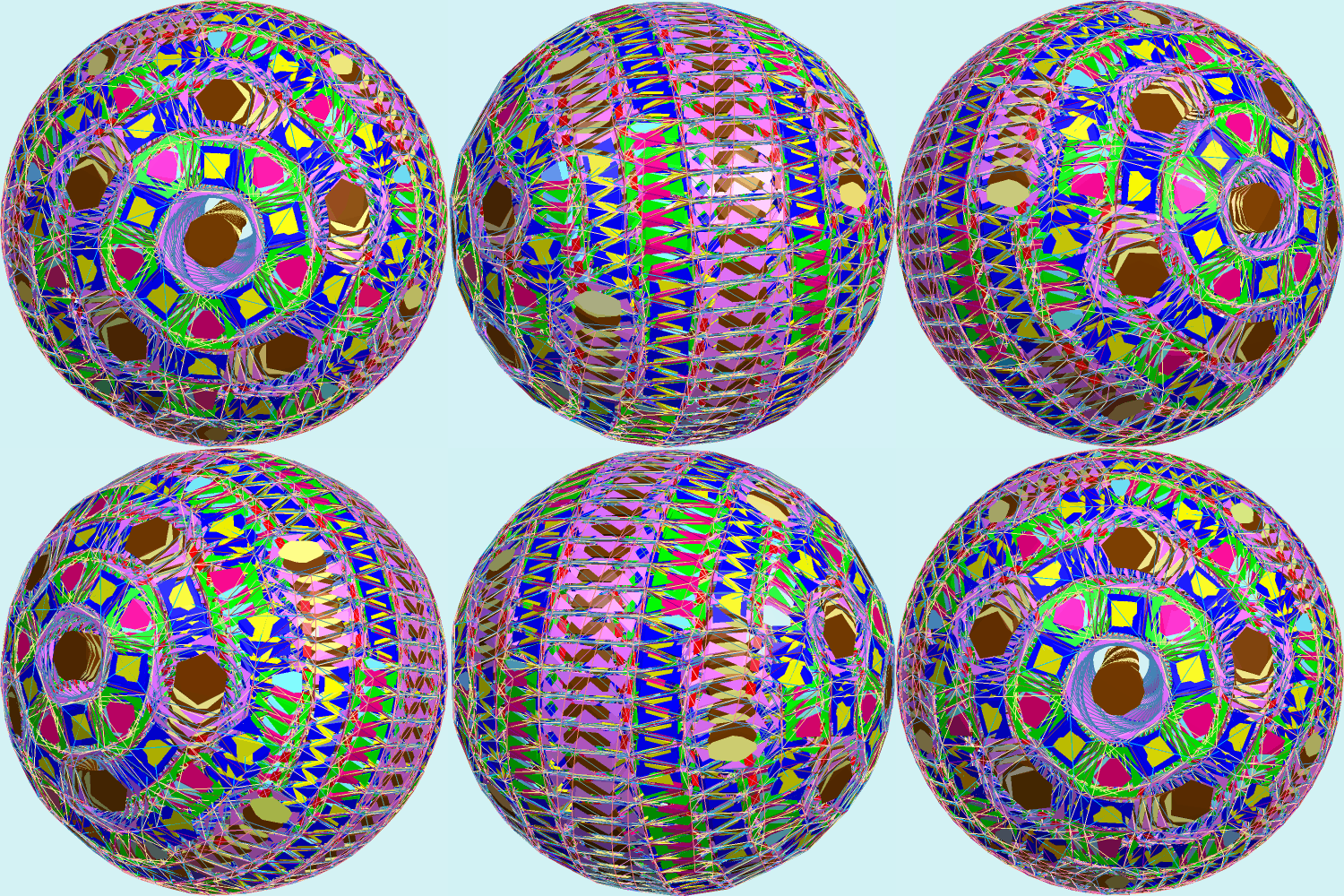

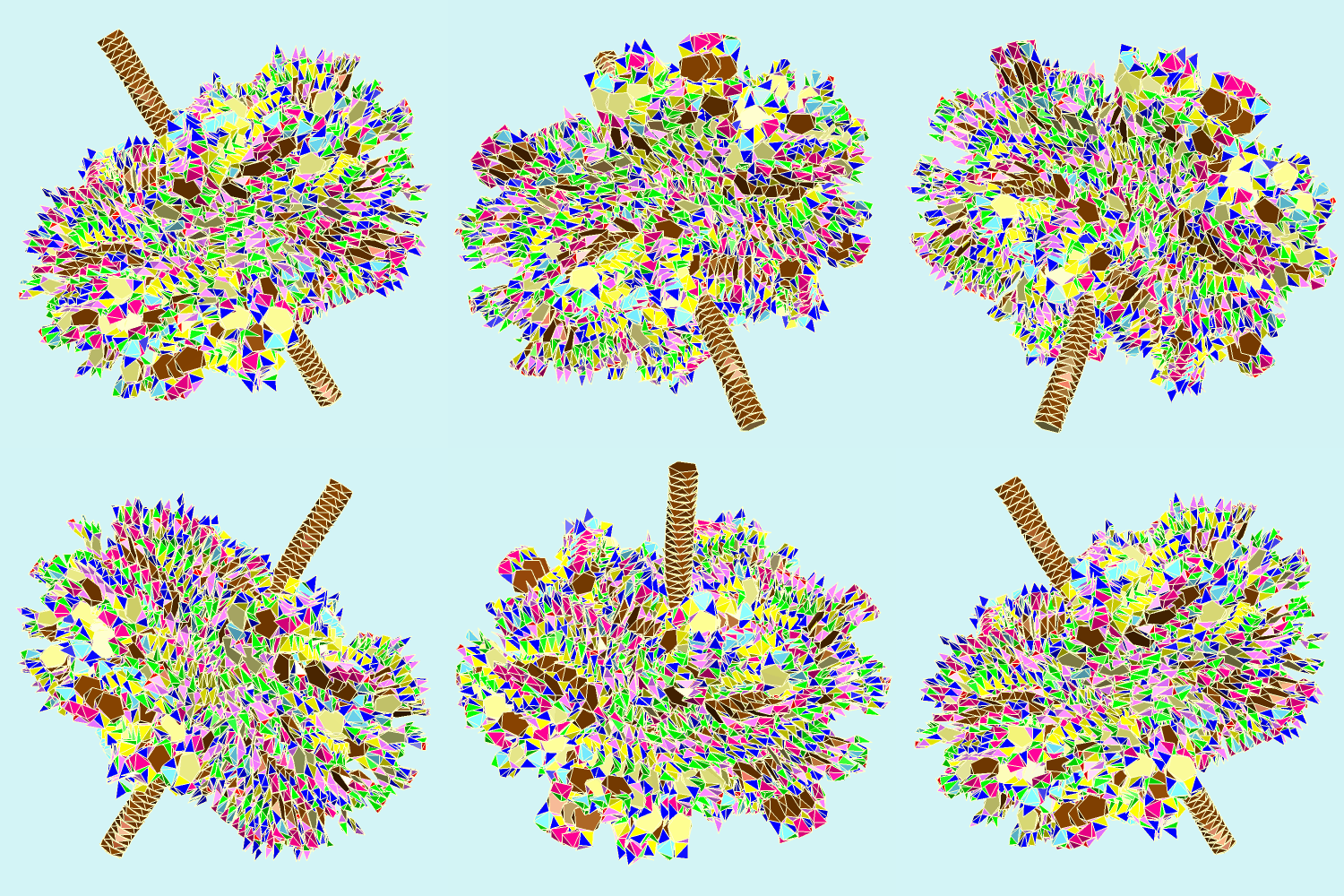
These are the symmetries that Conway refered to as [I x Cn]. As n approaches infinity, these symmetries approach kidoteric symmetry. I coded these using the quarternion sets ex x cn1. When N is even, then there are 30 swirl rings with ki-2N-gon symmetry which generate 60N essic areas. When N is odd, the 30 swirl rings are ghosted and form girdles in white space instead, these girdles have skewed ki-4N-gon symmetry. When N is divisible by 5, then there is a set of twelve swirl rings with ki-2N-gon symmetry, these form 24N kipegic areas (2N spots per ring). When N is not divisible by 5, then the rings are ghosted into white space, but do form girdles with 10mN/5 kigyrogon symmetry where m is the modulus of N mod 5, 1 and 4 are considered equivalent as well as 2 and 3, but they gyrate in different directions. When N is divisible by 3, then there is a set of 20 swirl rings with ki-2N-gon symmetry, these form 2N kitrigic areas for each ring (40N all together). When N is not divisible by 3, then the rings are ghosted into white space, but do form girdles with 6N/3 kigyrogon symmetry. There are no point locations nor cross rings. White space creates 120N no sym areas.
1-Skidoic Symmetry - [5,3:1]⁺ order 120. There are 12 ghost girdles with 10/5-kigyrogonal symmetry, 20 ghost girdles with 6/3 kigyrogonal symmetry and 30 ghost girdles with skewed kisquare symmetry, all of which are in white space. White space generates 120 no sym areas. All areas are white space here.
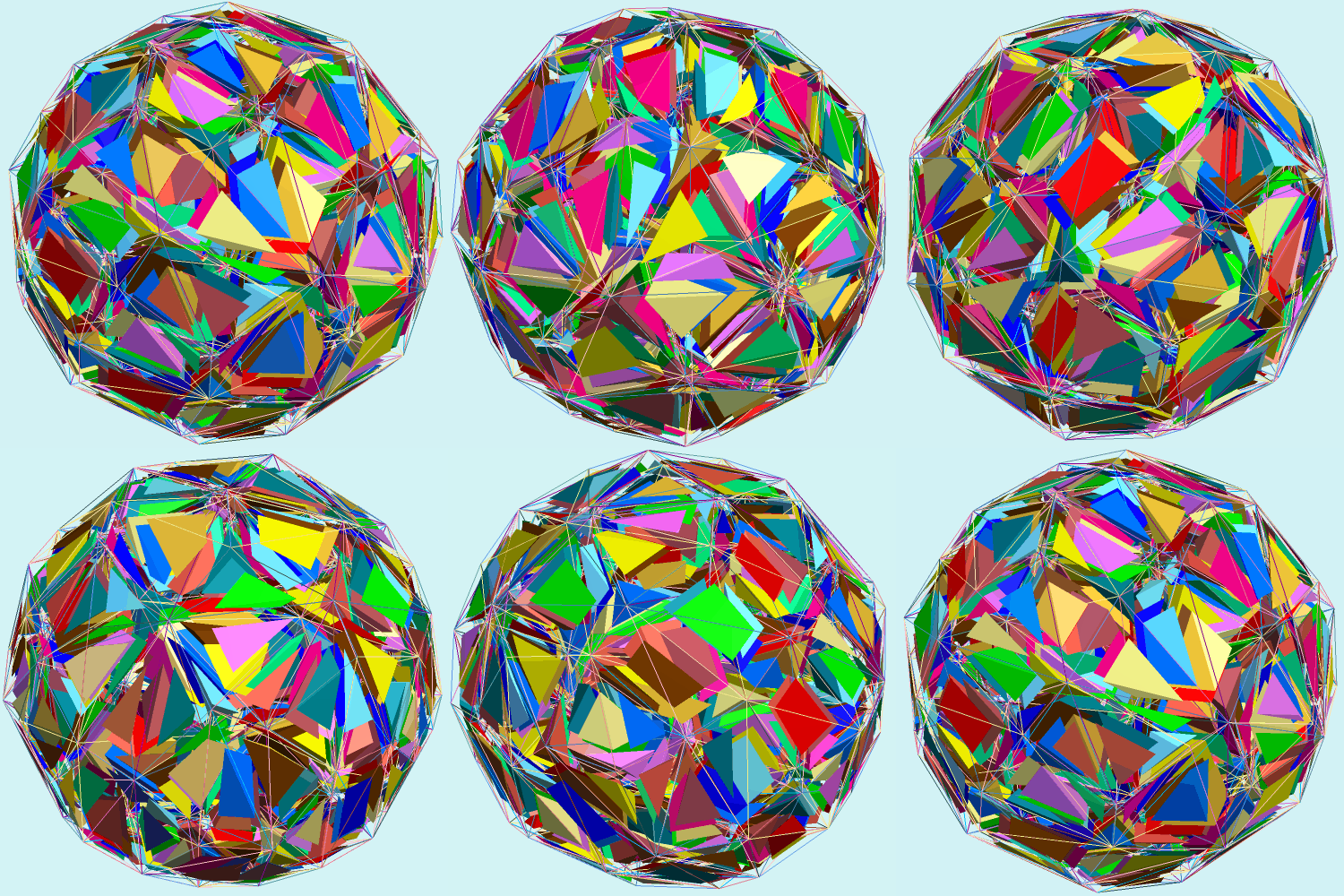

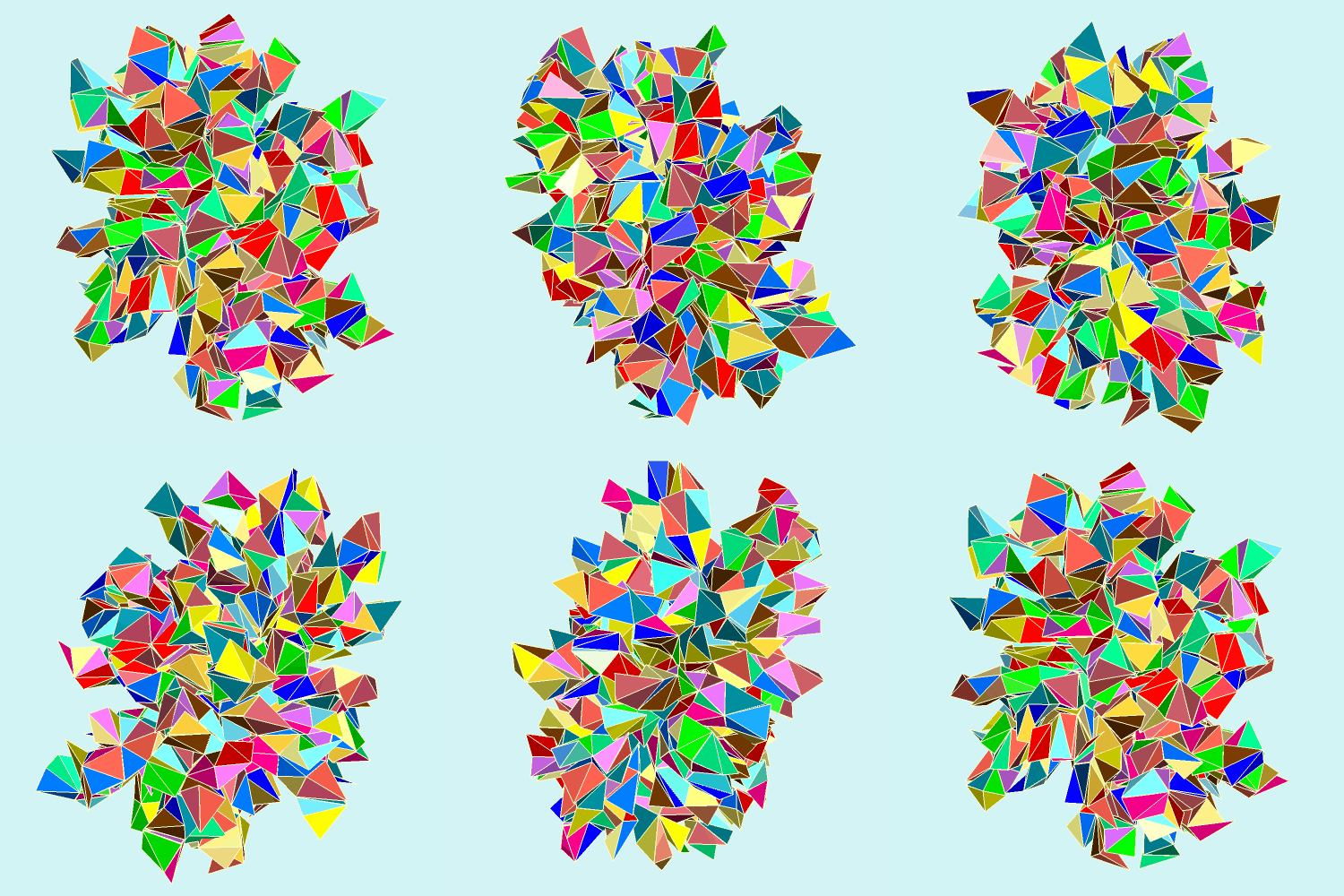
2-Skidoic Symmetry = 1-Swirldoic Symmetry - [5,3:2]⁺ order 240. There are 30 swirl rings with kisquare symmetry which create 120 essic spots. There are 12 ghost girdles with 20/(5/2)-kigyrogonal symmetry and 20 ghost girdles with 12/3 kigyrogonal symmetry, which are in white space. White space generates 240 no sym areas.


3-Skidoic Symmetry - [5,3:3]⁺ order 360. There are 20 swirl rings with kihexagon symmetry which create 120 kitrigic areas. There are 12 ghost girdles with 30/(5/2)-kigyrogonal symmetry and 30 ghost girdles with skewed ki-12-gonal symmetry, which are in white space. White space generates 360 no sym areas.


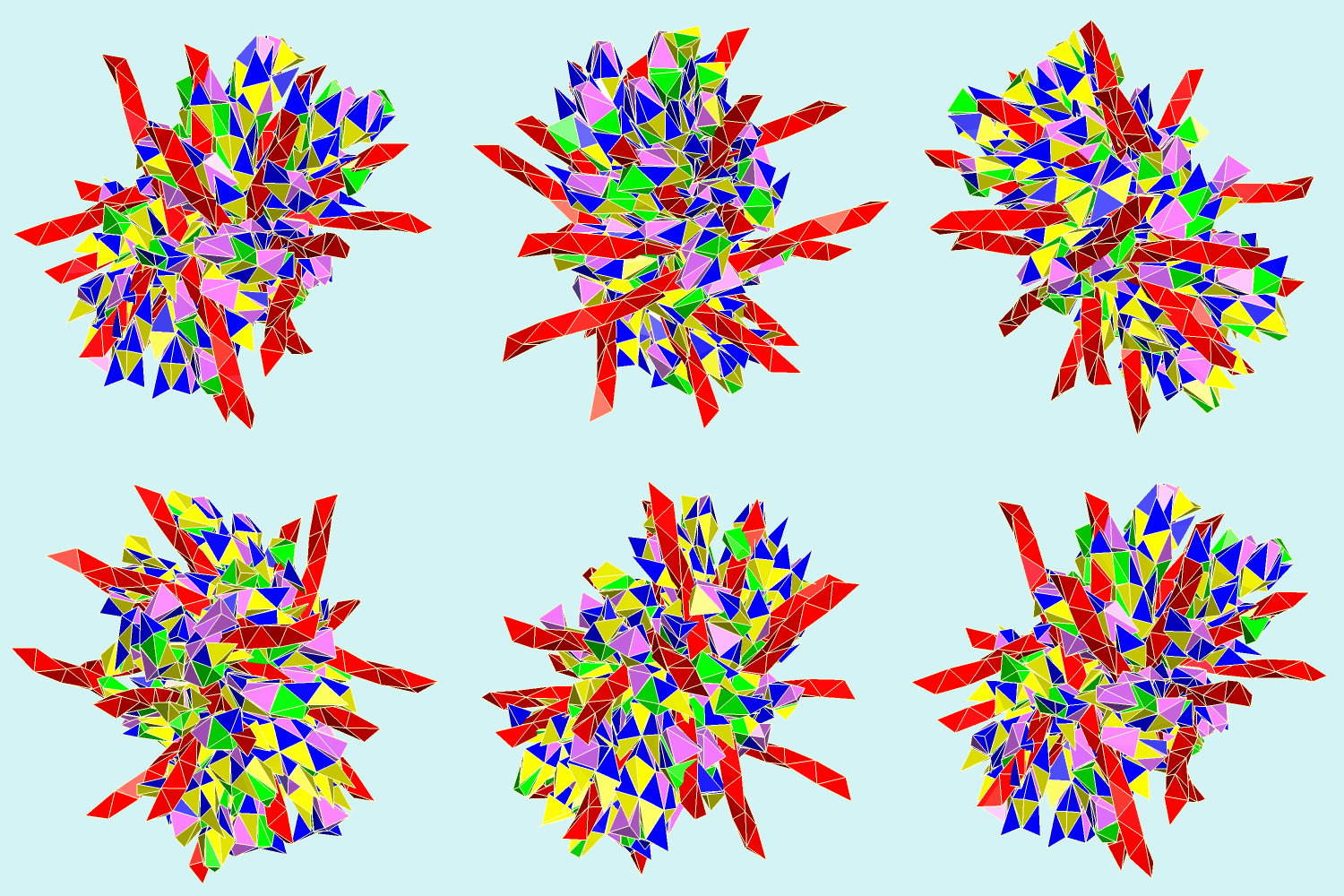
4-Skidoic Symmetry - [5,3:4]⁺ order 480. There are 30 swirl rings with kioctagonal symmetry which create 240 essic spots. There are 12 ghost girdles with 40/5-kigyrogonal symmetry and 20 ghost girdles with 24/3 kigyrogonal symmetry, which are in white space. White space generates 480 no sym areas.


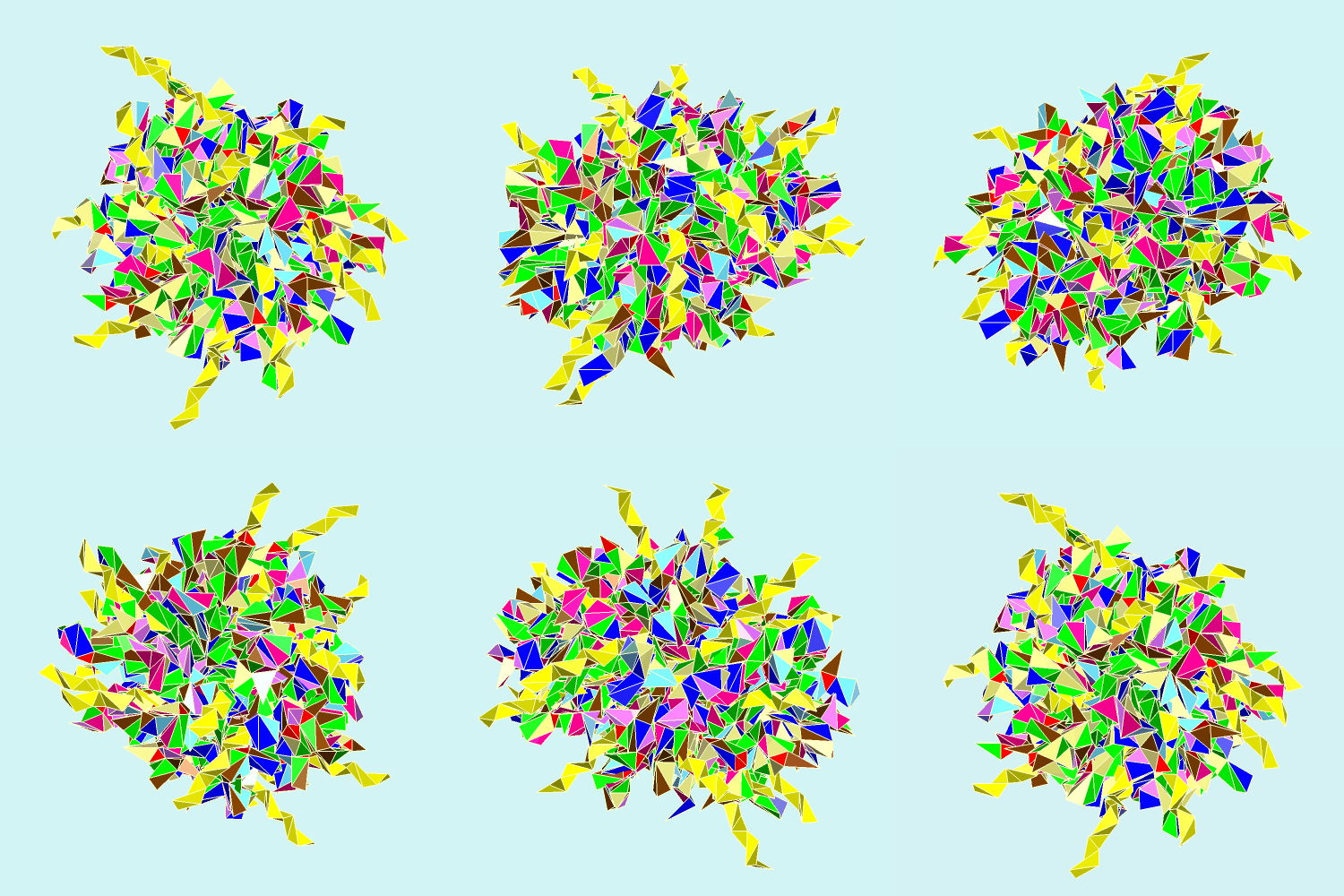
5-Skidoic Symmetry - [5,3:5]⁺ order 600. Also called kisispic symmetry. There are 12 swirl rings with kidecagonal symmetry which generate 120 kipegic regions. There are 20 ghost girdles with 30/3 kigyrogonal symmetry and 30 ghost girdles with skewed ki-20-gonal symmetry, all of which are in white space. White space generates 600 no sym areas.


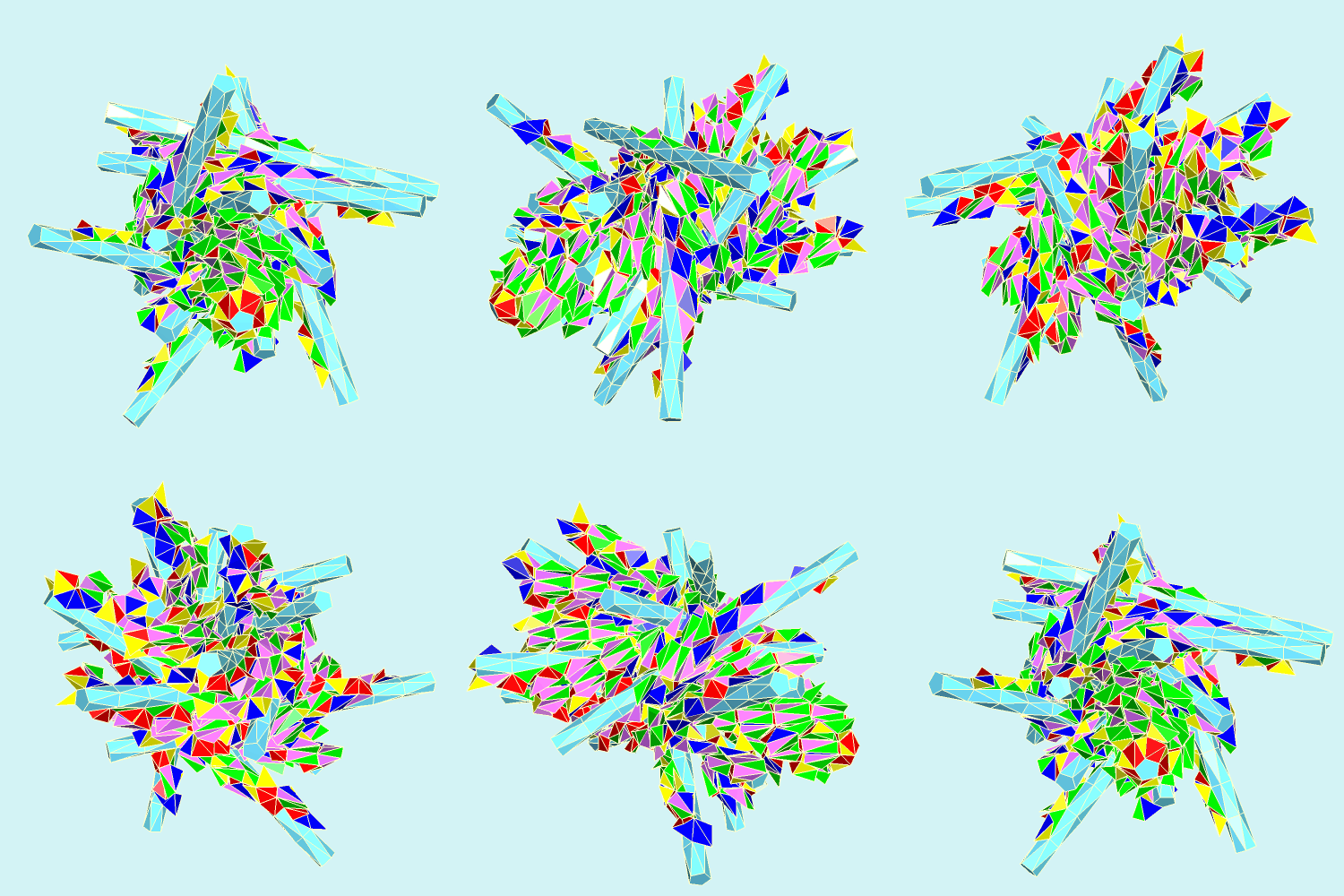
6-Skidoic Symmetry - [5,3:6]⁺ order 720. There are 20 swirl rings with ki-12-gon symmetry which create 240 kitrigic areas. There are 30 swirl rings with ki-12-gon symmetry which create 360 essic areas. There are 12 ghost girdles with 60/5-kigyrogonal symmetry which are in white space. White space generates 720 no sym areas.
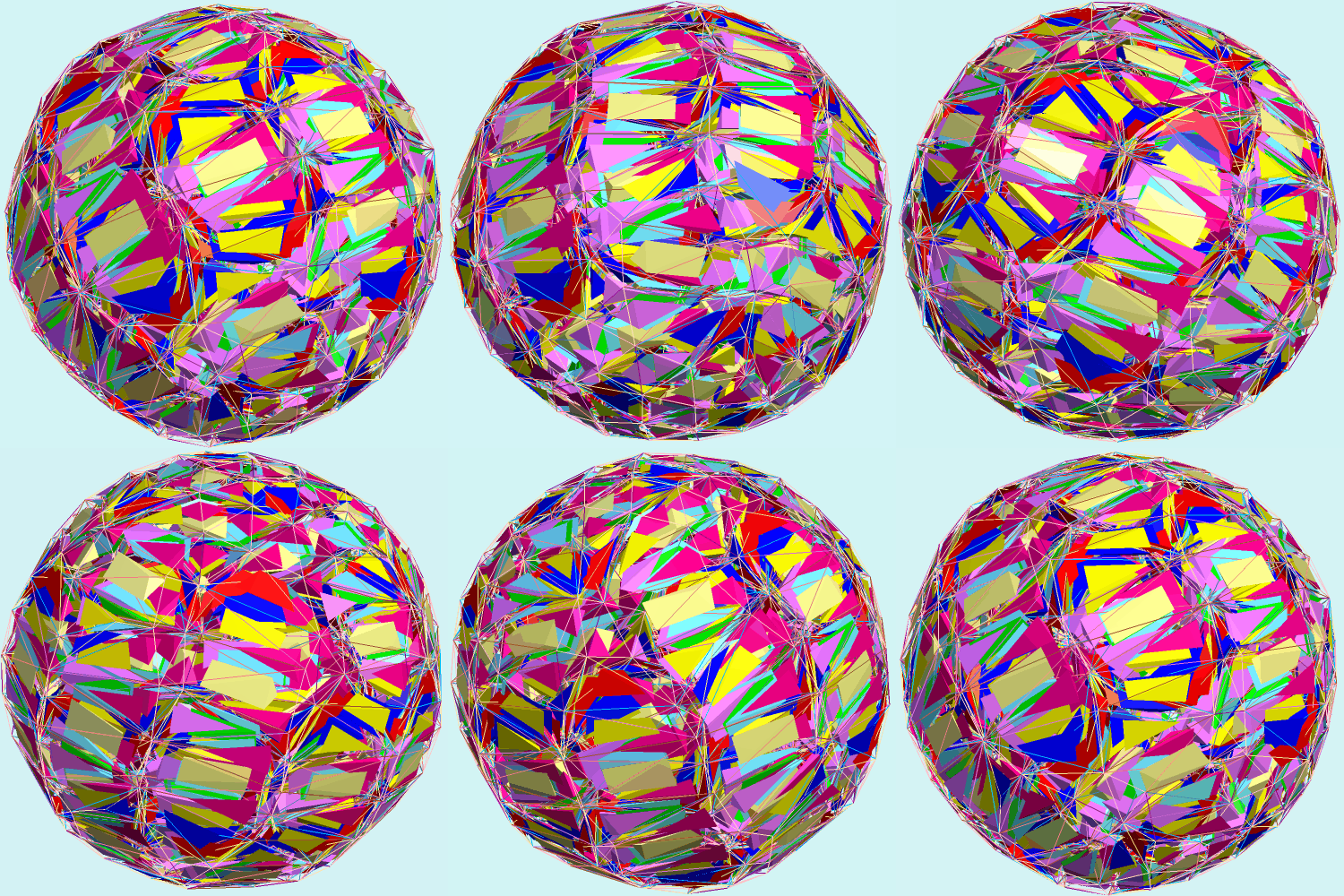

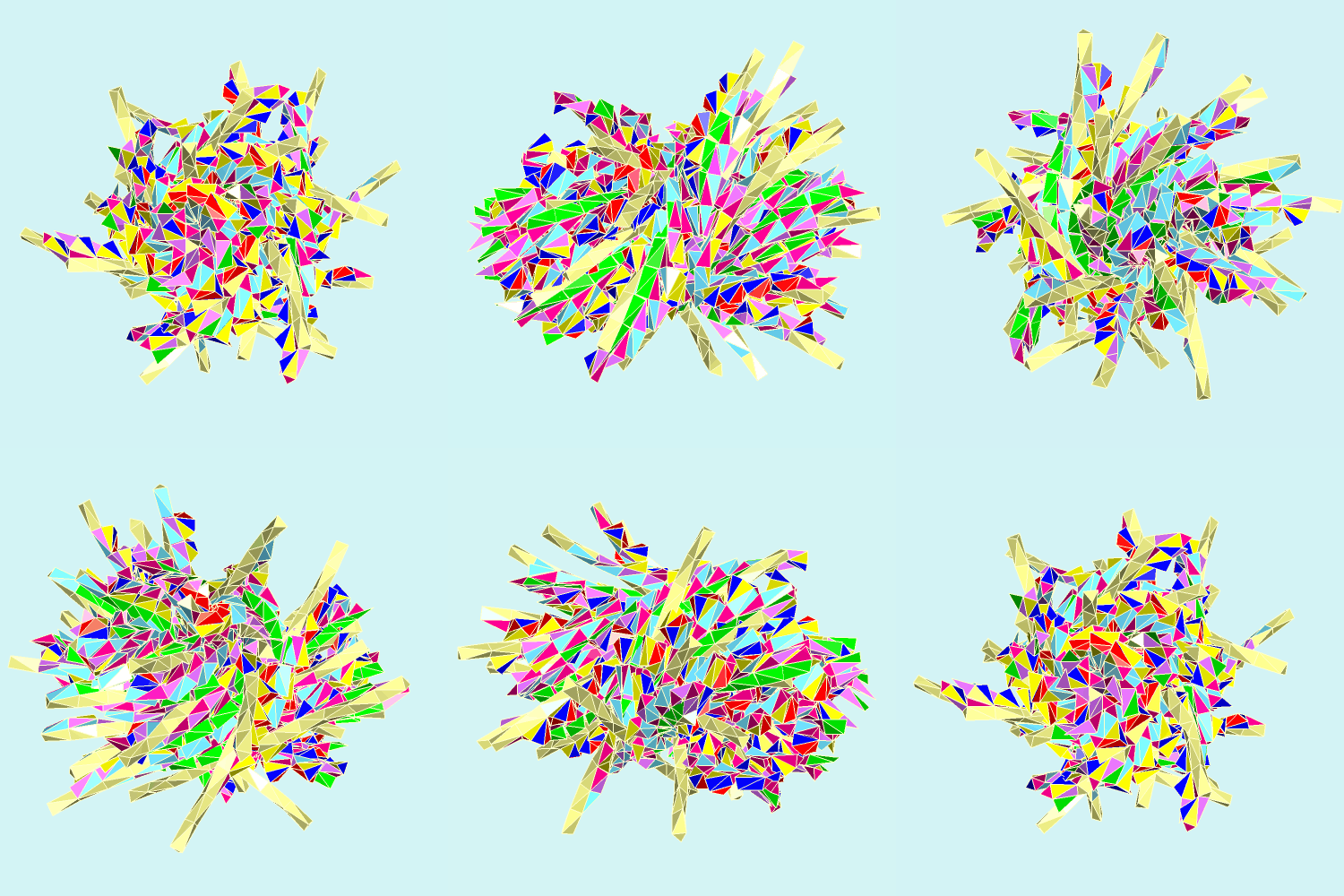
7-Skidoic Symmetry - [5,3:7]⁺ order 840. There are 12 ghost girdles with 70/5-kigyrogonal symmetry, 20 ghost girdles with 42/3 kigyrogonal symmetry and 30 ghost girdles with skewed ki-28-gonal symmetry, all of which are in white space. White space generates 840 no sym areas. All areas are white space here.


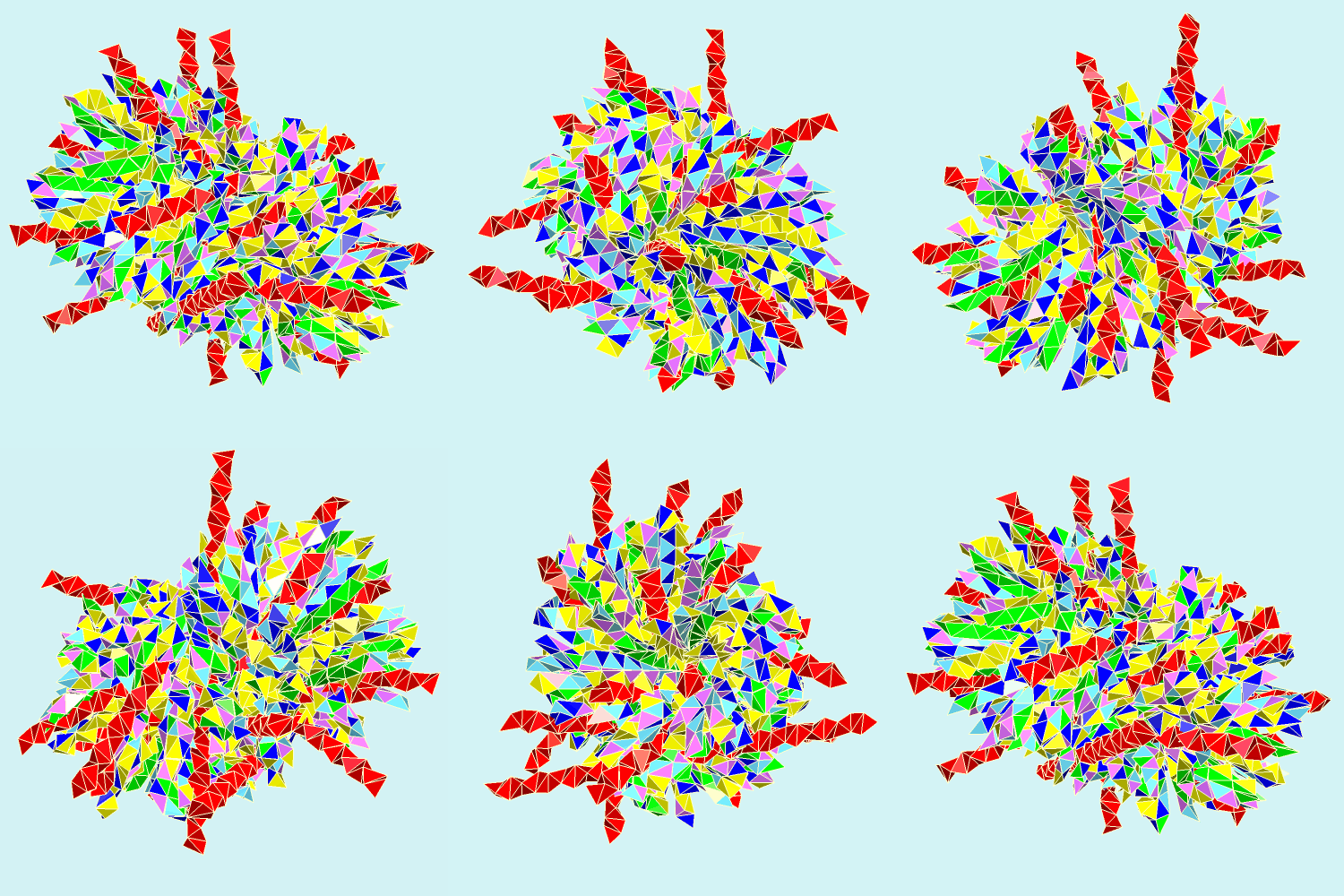
8-Skidoic Symmetry - [5,3:8]⁺ order 960. There are 30 swirl rings with ki-16-gonal symmetry which create 480 essic spots. There are 12 ghost girdles with 80/(5/2)-kigyrogonal symmetry and 20 ghost girdles with 48/3 kigyrogonal symmetry, which are in white space. White space generates 960 no sym areas.
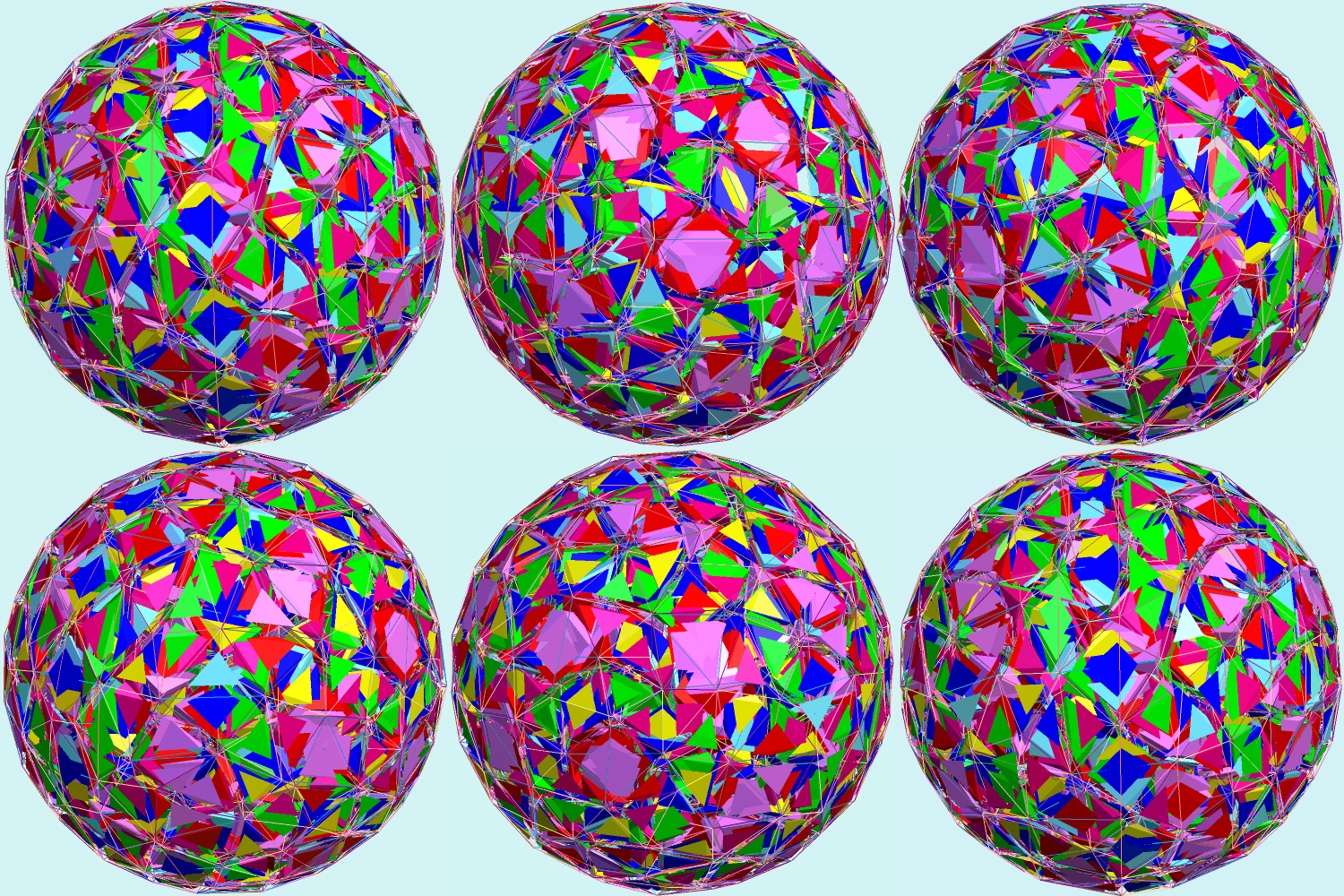


9-Skidoic Symmetry - [5,3:9]⁺ order 1080. There are 20 swirl rings with ki-18-gon symmetry which create 360 kitrigic areas. There are 12 ghost girdles with 90/5-kigyrogonal symmetry and 30 ghost girdles with skewed ki-36-gonal symmetry, which are in white space. White space generates 1080 no sym areas.
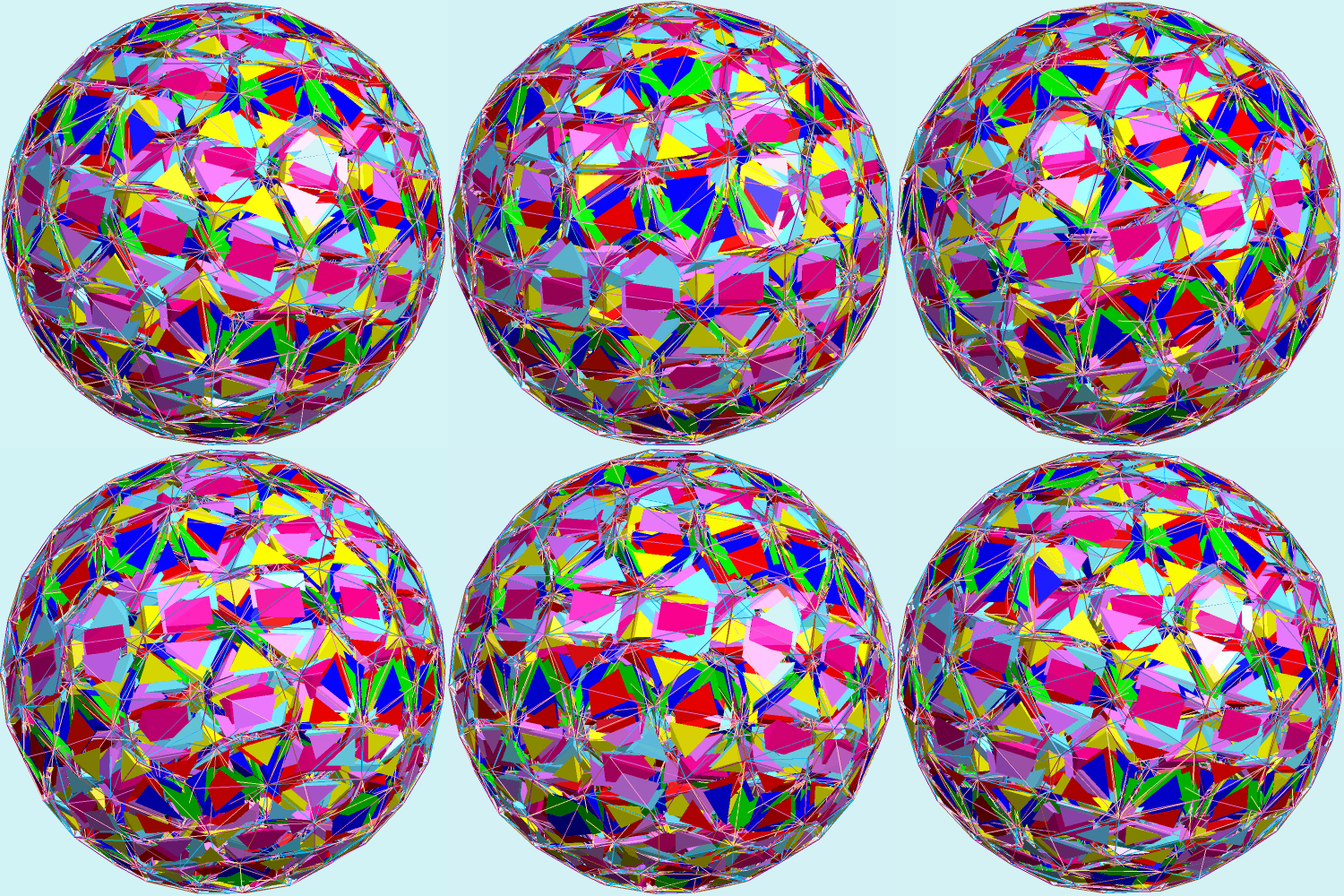


10-Skidoic Symmetry - [5,3:10]⁺ order 1200. There are 12 swirl rings with ki-20-gonal symmetry which generate 240 kipegic regions. There are 30 swirl rings with ki-20-gon symmetry which create 600 essic areas. There are 20 ghost girdles with 60/3 kigyrogonal symmetry which are in white space. White space generates 1200 no sym areas.
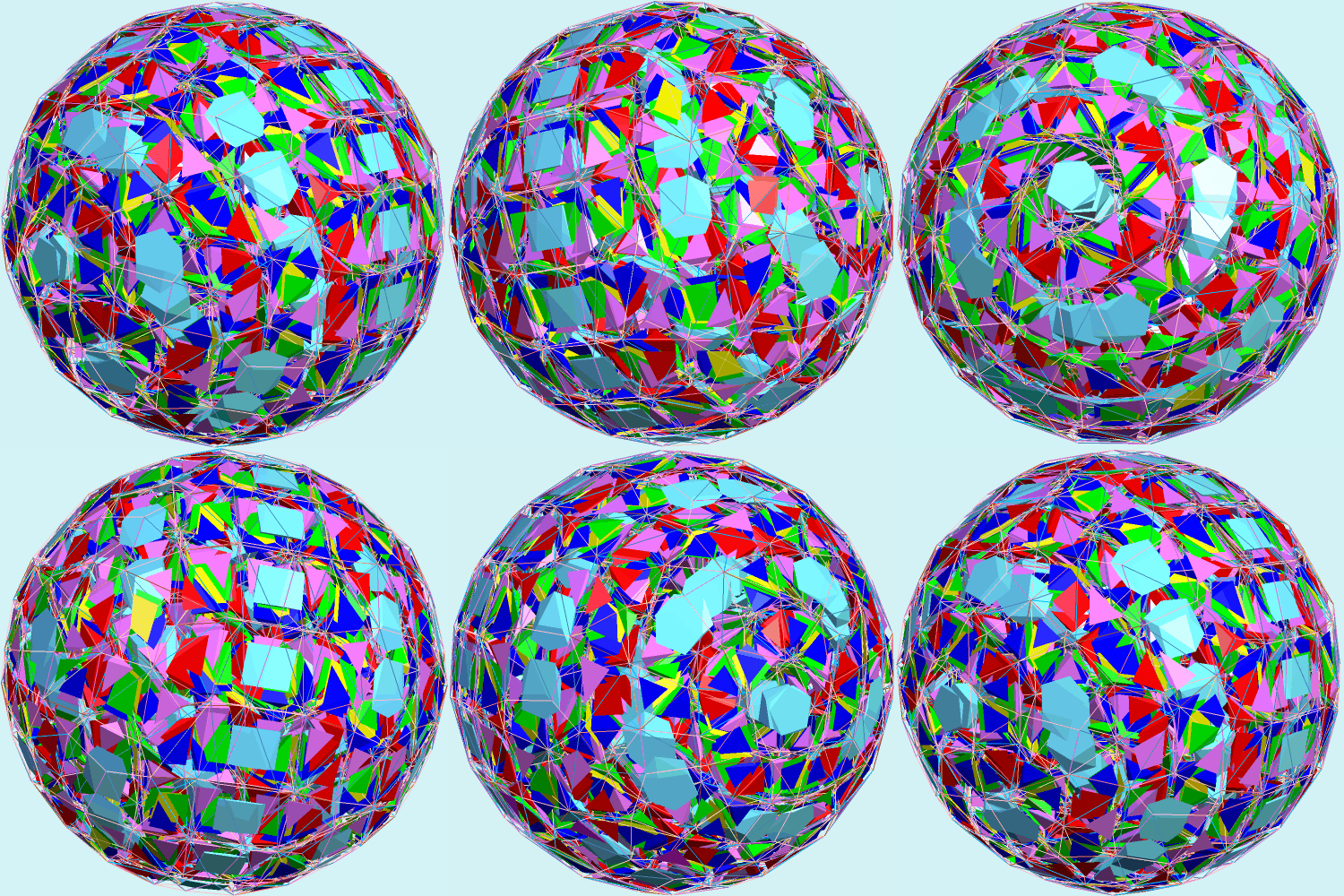

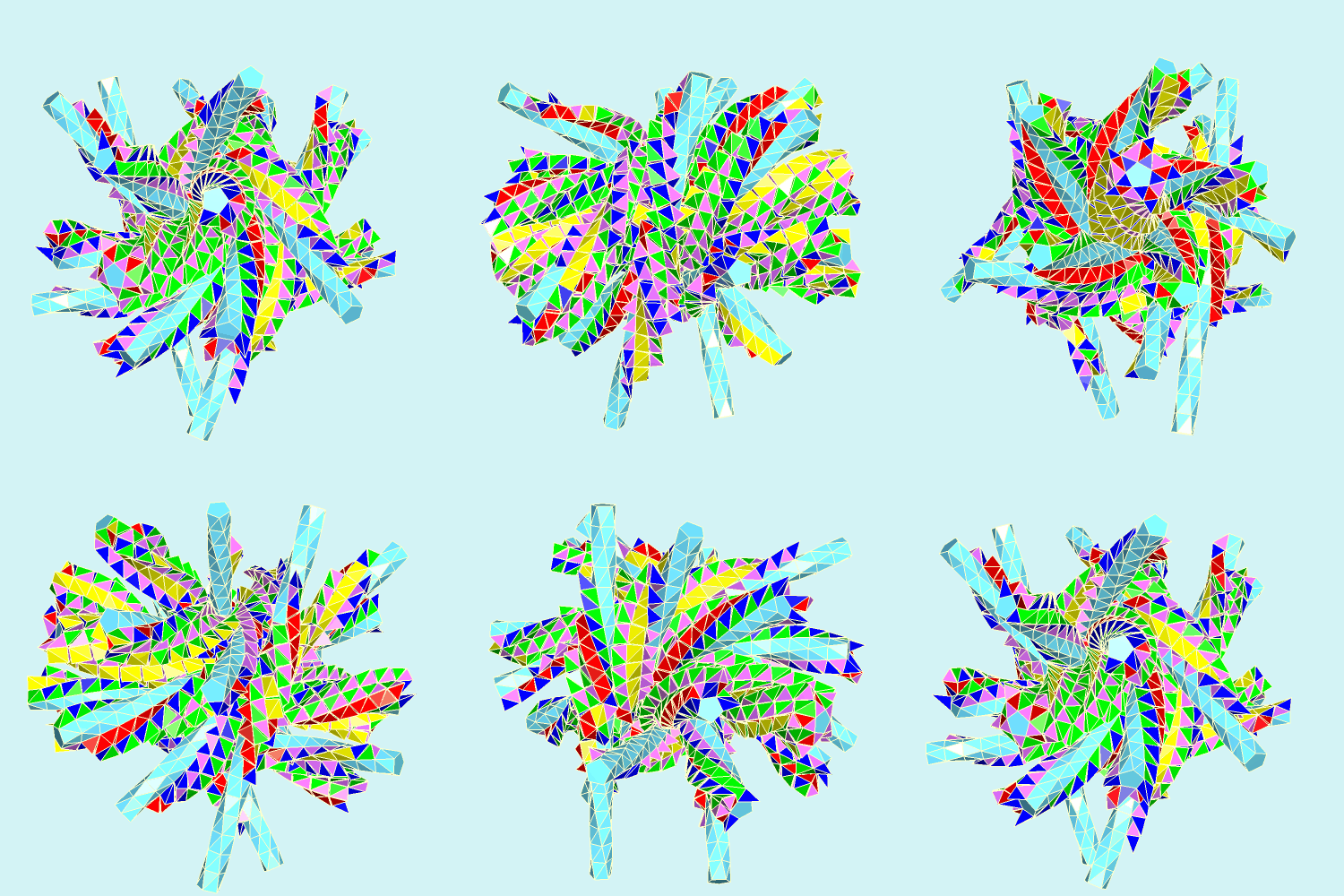
12-Skidoic Symmetry - [5,3:12]⁺ order 1440. There are 20 swirl rings with ki-24-gon symmetry which create 480 kitrigic areas. There are 30 swirl rings with ki-24-gon symmetry which create 720 essic areas. There are 12 ghost girdles with 120/(5/2) -kigyrogonal symmetry which are in white space. White space generates 1440 no sym areas.


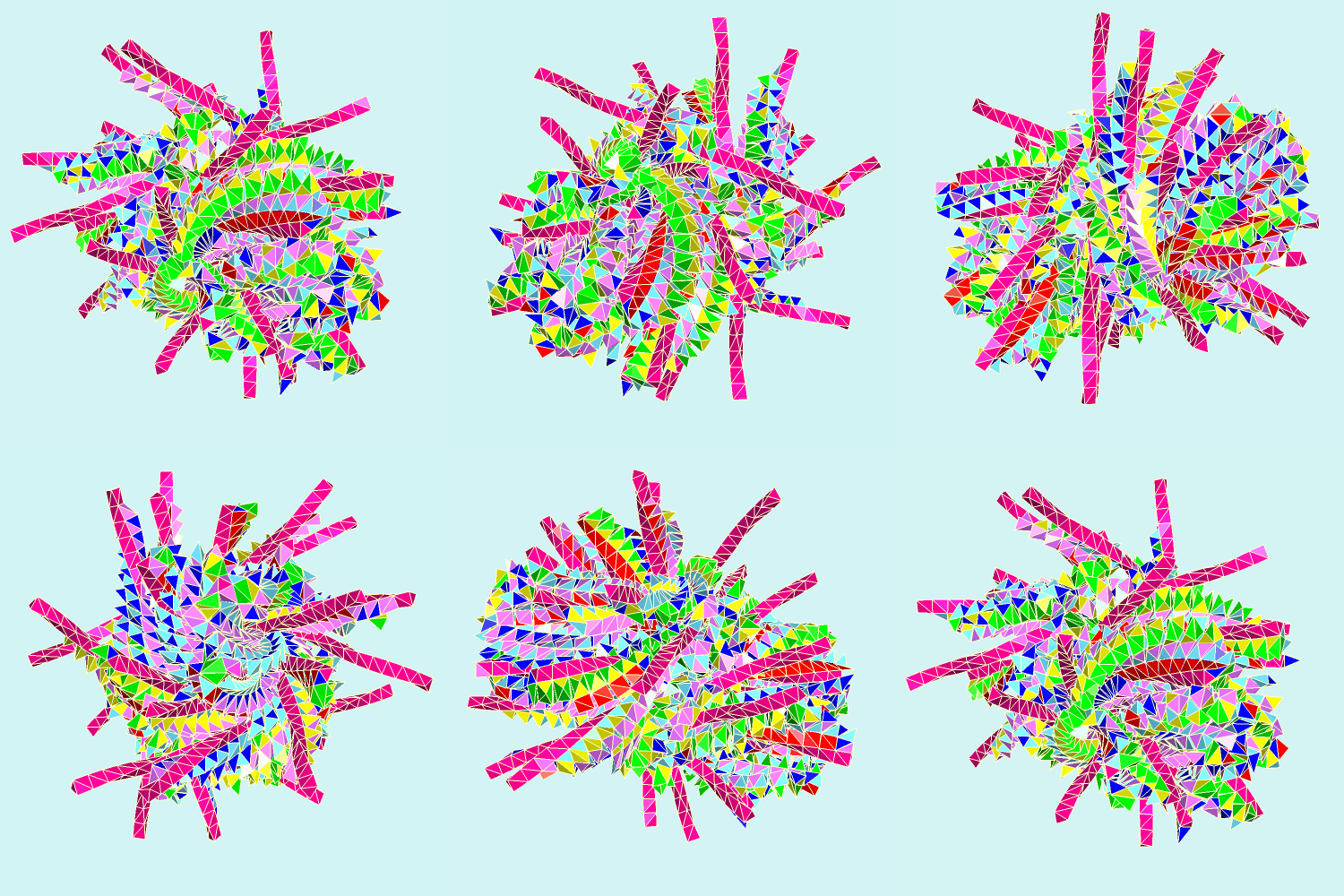
15-Skidoic Symmetry - [5,3:15]⁺ order 1800. There are 12 swirl rings with ki-30-gonal symmetry which generate 360 kipegic regions. There are 20 swirl rings with ki-30-gonal symmetry which creates 600 kitrigic regions. There are 30 ghost girdles with skewed ki-60-gonal symmetry which are in white space. White space generates 1800 no sym areas.


18-Skidoic Symmetry - [5,3:18]⁺ order 2160. There are 20 swirl rings with ki-36-gon symmetry which create 720 kitrigic areas. There are 30 swirl rings with ki-36-gon symmetry which create 1080 essic areas. There are 12 ghost girdles with 180/(5/2) -kigyrogonal symmetry which are in white space. White space generates 2160 no sym areas.


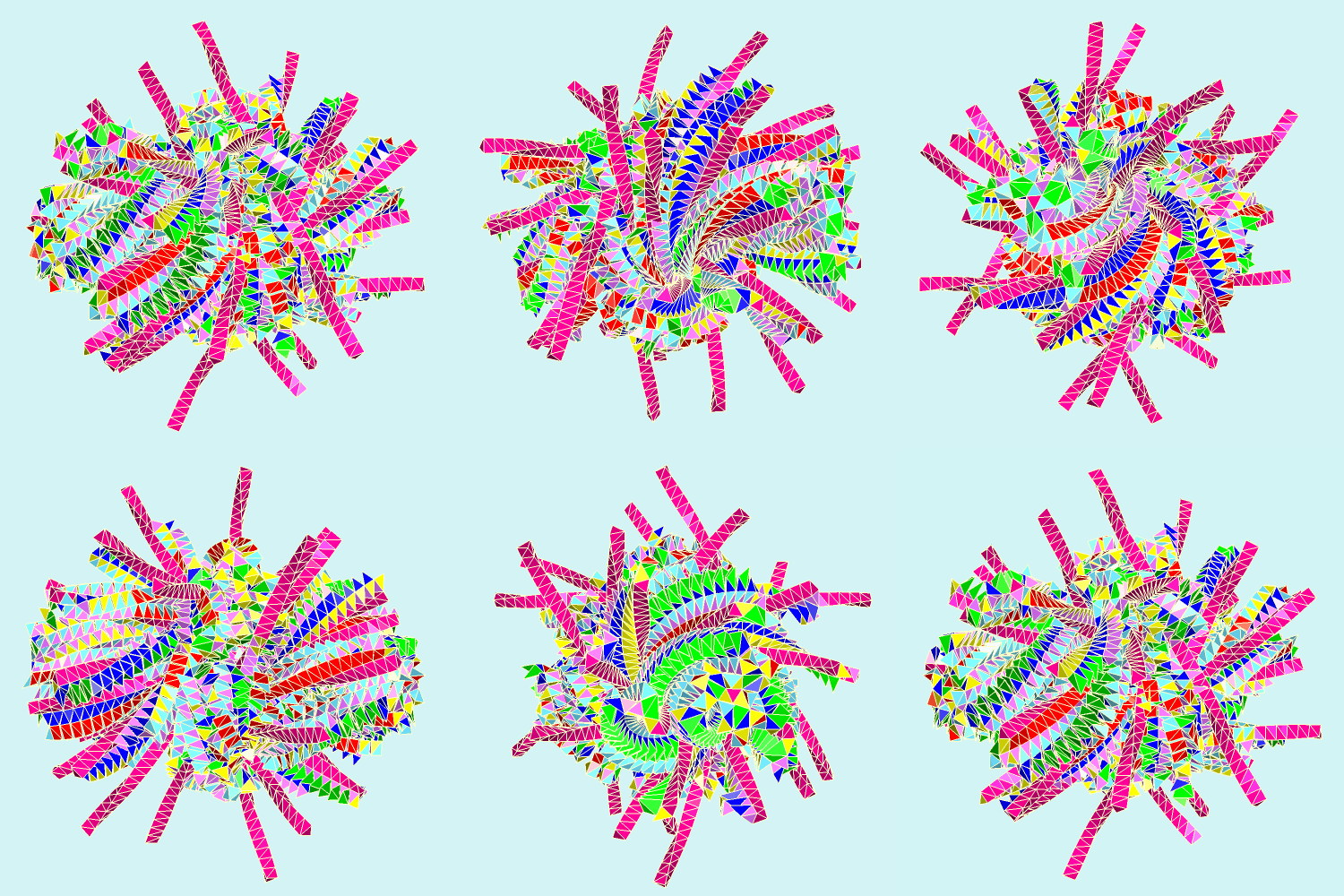
20-Skidoic Symmetry - [5,3:20]⁺ order 2400. There are 12 swirl rings with ki-40-gonal symmetry which generate 480 kipegic regions. There are 30 swirl rings with ki-40-gon symmetry which create 1200 essic areas. There are 20 ghost girdles with 120/3 kigyrogonal symmetry which are in white space. White space generates 2400 no sym areas.


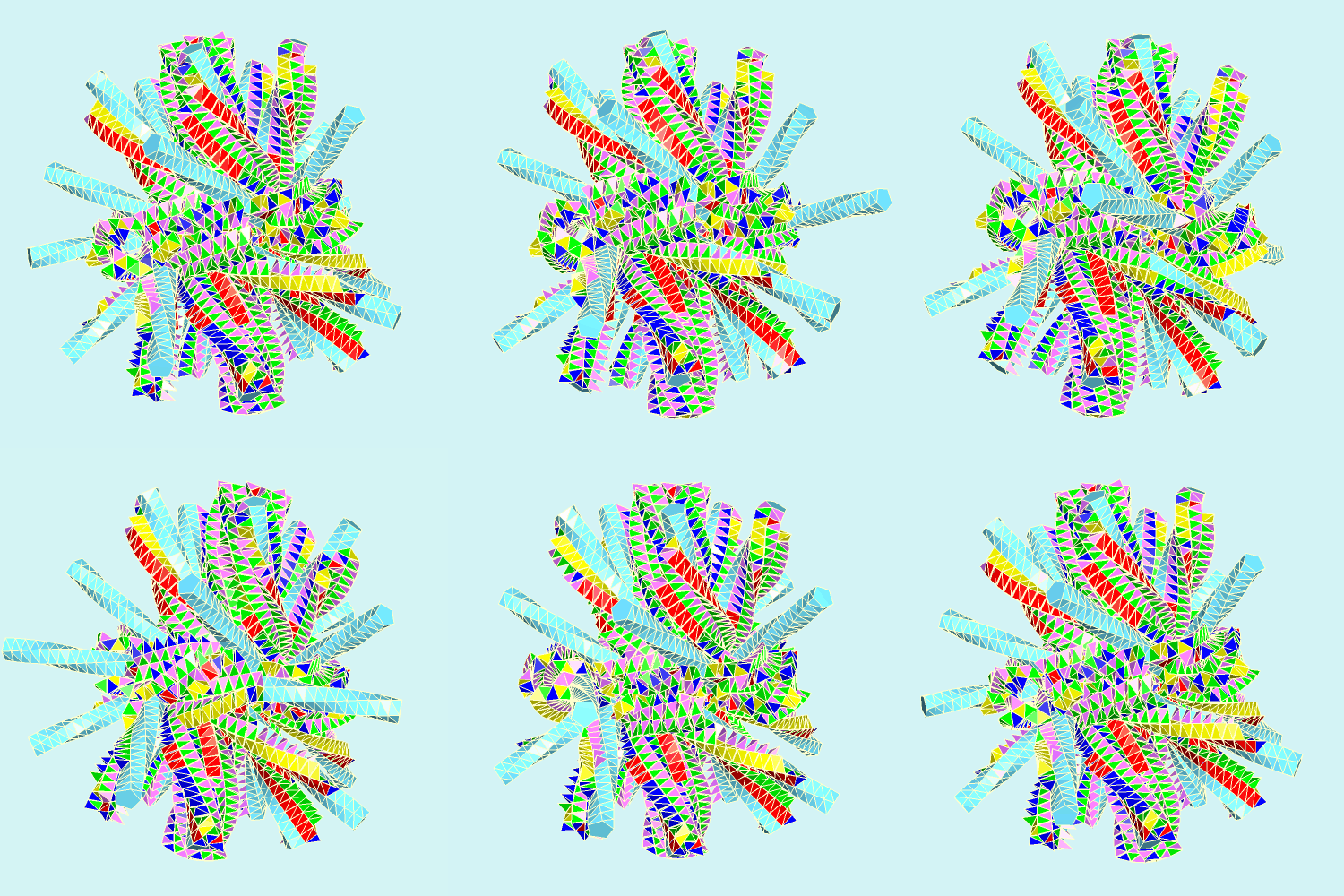
25-Skidoic Symmetry - [5,3:25]⁺ order 3000. There are 12 swirl rings with ki-50-gonal symmetry which generate 600 kipegic regions. There are 20 ghost girdles with 150/3 kigyrogonal symmetry and 30 ghost girdles with skewed ki-100-gonal symmetry, all of which are in white space. White space generates 3000 no sym areas.


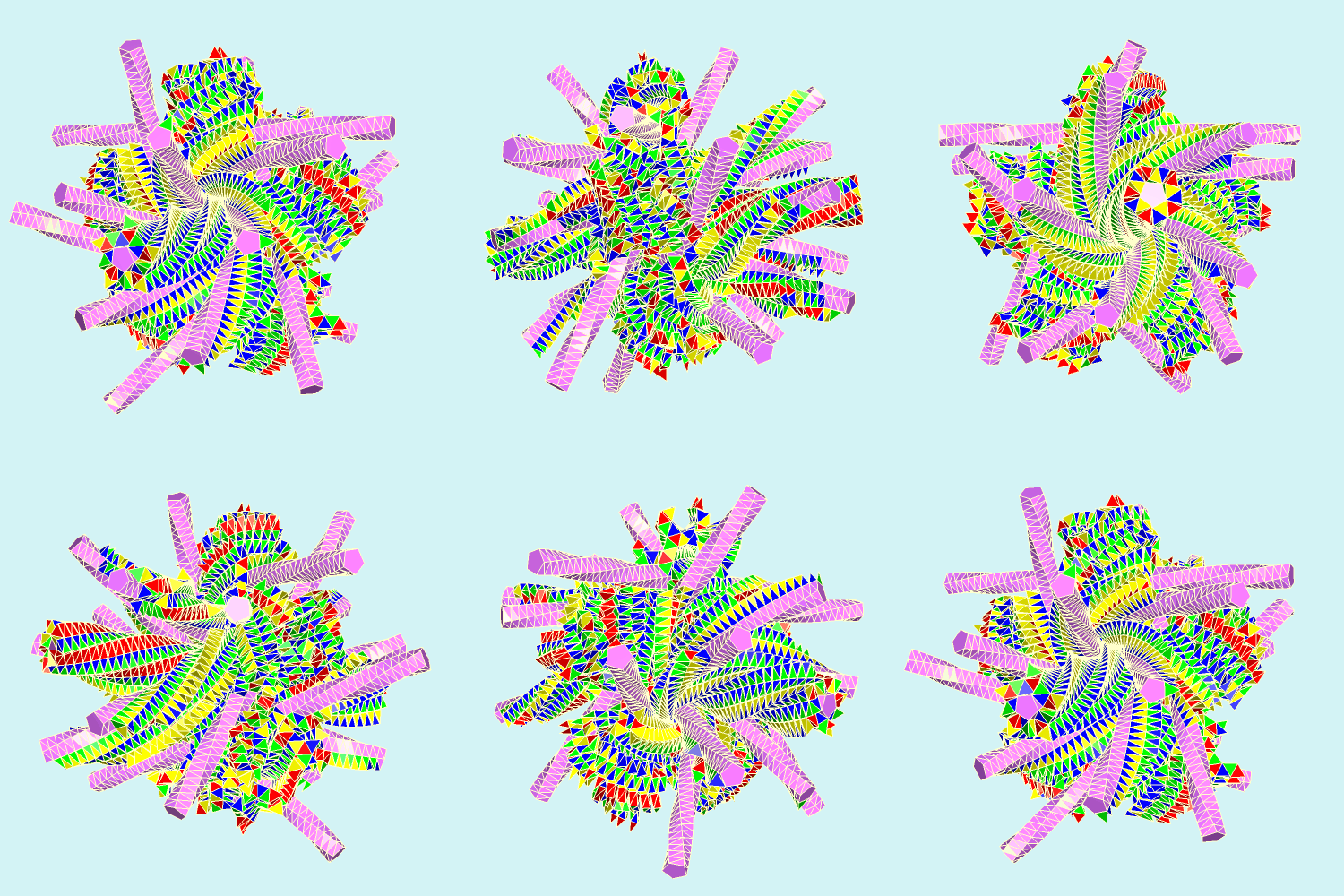
30-Skidoic Symmetry - [5,3:30]⁺ order 3600. There are 12 swirl rings with ki-60-gonal symmetry which generate 720 kipegic regions. There are 20 swirl rings with ki-60-gonal symmetry which creates 1200 kitrigic regions. There are 30 swirl rings with ki-60-gonal symmetry which create 1800 essic areas. White space generates 3600 no sym areas.

Four Dimensional Symmetries - Part 2 - Prismattic Symmetries . . . Four Dimensional Symmetries - Part 4 - Swirltettic Symmetries
Back to Polychoron Site . . . Home Page

Page created by Jonathan Bowers, 2021
e-mail = hedrondude at suddenlink dot net